
Table of Contents
The morin khuur, or horsehead fiddle, is more than a musical instrument in Mongolia — it’s a cultural soul, a spiritual messenger, and a national symbol. This traditional instrument is also part of the UNESCO’s Representative List of the Intangible Cultural Heritage of Humanity (read more here). At the Jonon Khar Morin Khuur Museum in Ulaanbaatar, master craftsman and performer Bayasgalan Sukhbaatar keeps the ancient art alive.
The Jonon Khar Museum Is a Sanctuary for the Morin Khuur
Founded in 2009, the museum now showcases over 400 horsehead fiddles, paintings, and photographs. It also offers live traditional Mongolian music performances. Around 200 to 250 pieces are displayed at any given time.
The Morin Khuur’s Animal Head Changed with History
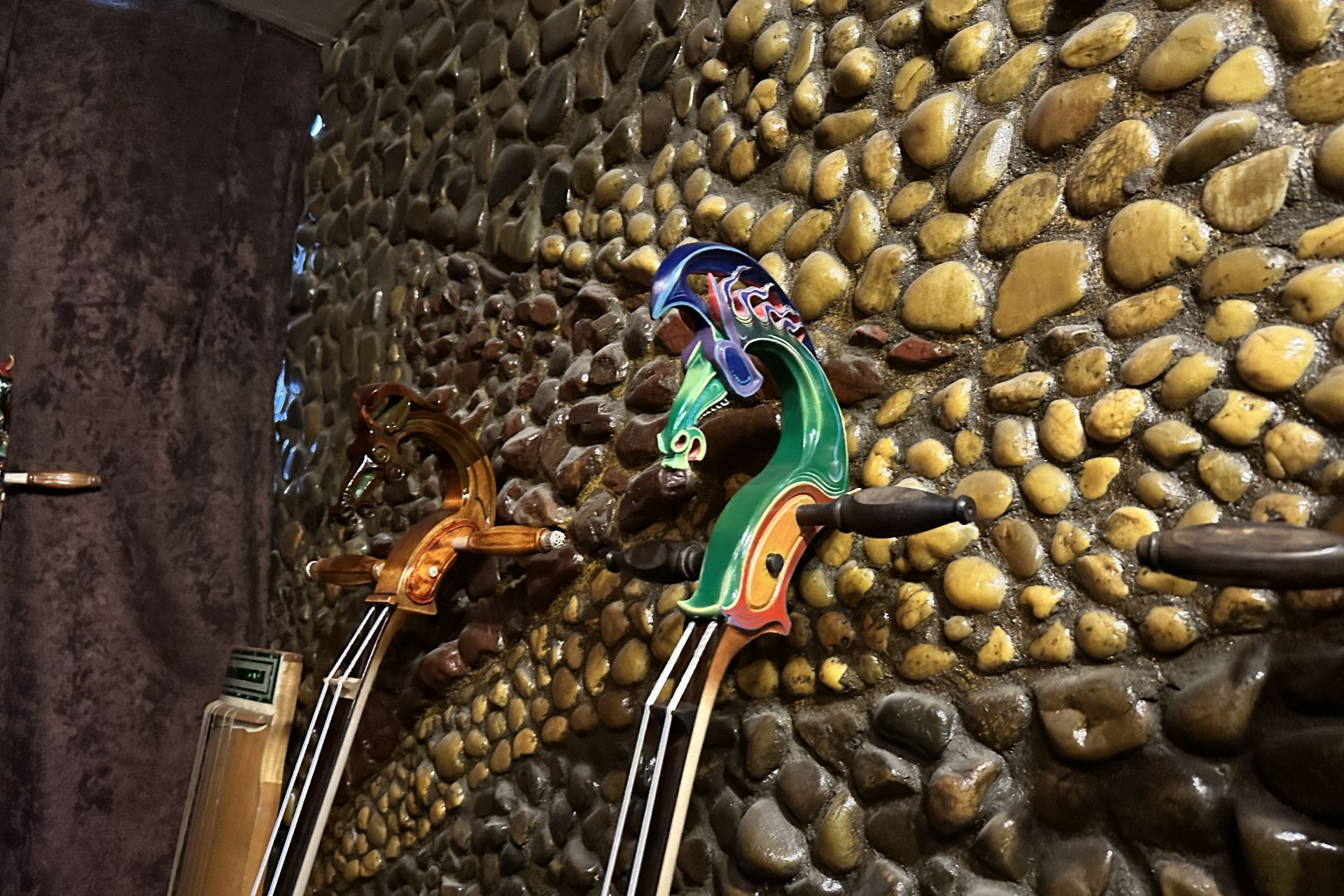
While today’s fiddle features a horse head, older versions included lion, dragon, swan, and crocodile heads. Mongolia’s independence movement, artisans created the Zee Badtai Khuur, featuring a horse instead of a the dragon — a powerful symbol of national pride.
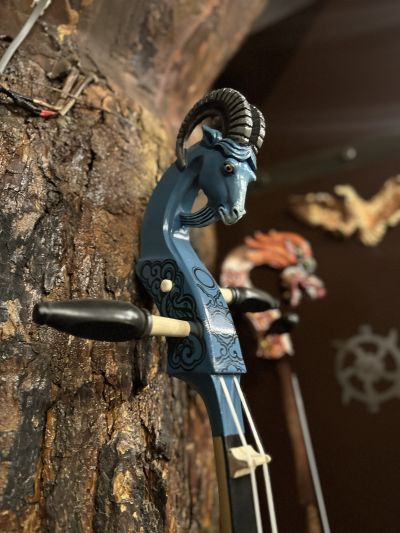
This rare blue goat-head fiddle shows the diversity of traditional Mongolian instrument design.
The Word “Khuur” Means More Than Sound
According to Sukhbaatar, khuur may come from khuuraakh — “to lure or charm.” In Mongolian belief, the fiddle’s vibration draws in good energy and repels negativity, like “banishing the cold.” It’s a sacred sound said to reach the soul.
Fifth-Generation Fiddle Master
Sukhbaatar is the fifth generation of musicians in his family. Among his most cherished pieces is the Ikhel, a rare bowed instrument from the Uriankhai ethnic group. He also hand-crafted 108 unique morin khuurs, many of them inspired by historical and spiritual motifs.
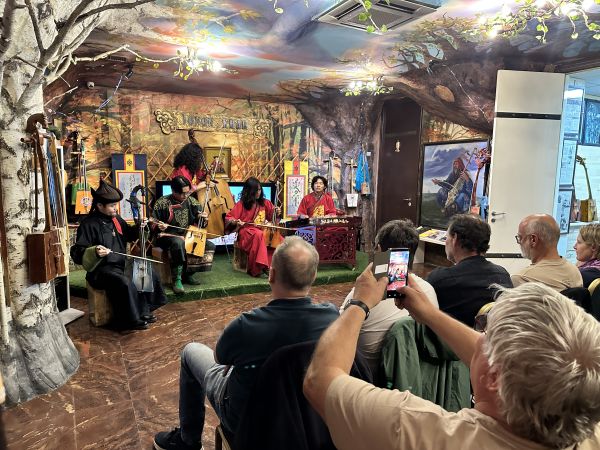
Visitors watch a live morin khuur performance by skilled musicians at the Jonon Khar Museum in Ulaanbaatar.
The Morin Khuur Is Felt in the Body
People often describe goosebumps while listening. The instrument’s vibrations flow from the ears to the brain, the heart, and into every cell. Its horsehair strings create powerful magnetic resonance — it’s music you feel, not just hear.
Morin Khuur Variants Show Mongolia’s Rich Past
From Borjigon-style fiddles with metal soundboxes to minimalist styles of the 1950s, the Jonon Khar Museum preserves and re-creates morin khuurs from across centuries.
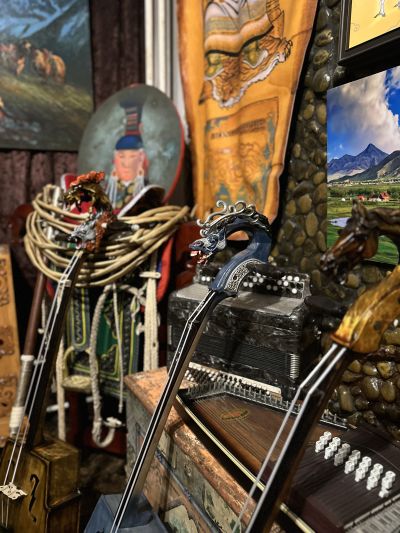
Dragon-headed fiddles beside nomadic tools and artwork celebrate Mongolia’s musical and visual traditions.
You Can Visit the Morin Khuur Museum in Ulaanbaatar
If you’re passionate about music, history, or Mongolian culture, the Jonon Khar Museum is a must-visit. Located in Ulaanbaatar, it offers guided tours and live performances upon request.
???? Read also: Top 10 Things to Do in Ulaanbaatar






Keep In Touch