
Table of Contents
Naadam is more than a festival — it is Mongolia, alive and in motion. Every July, generations of Mongolians gather beneath wide blue skies to celebrate traditions that have endured from the days of the steppe khans to today’s vibrant capital. The scent of sizzling khuushuur (fried meat pastry) lingers in the air, mingling with the hum of anticipation as crowds circle the National Stadium in Ulaanbaatar.
Since childhood, I’ve returned each year — standing beside my mother and sister, sharing airag (fermented mare’s milk), watching the events unfold with awe. This is more than pageantry; it’s a moment that stirs pride, belonging, and deep cultural memory. For travelers seeking authentic Mongolian experiences or planning a once-in-a-lifetime Naadam Festival tour, this celebration offers a rare and meaningful encounter with the heart of Mongolian identity.
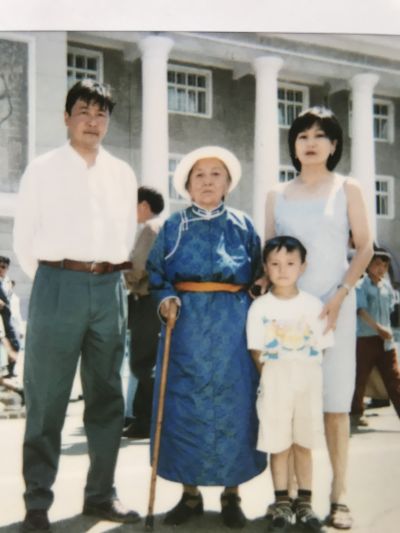
Father, Grandmother, Me (Jamsranjav), Mother at National Sport Stadium of Mongolia circa 1998
The Origins of Naadam festival: Where History and Heritage Collide
Naadam’s foundation lies in the “Three Manly Games”: wrestling, horse racing, and archery — disciplines that once trained the warriors of the steppe. These were not recreational sports, but core skills for survival, conquest, and unity.
References to such contests date back to the Hunnu Empire (209 BC–93 AD), while the tradition was formalized under Chinggis Khaan in the 13th century. His grand military gatherings were marked by these games, which showcased strength, agility, and loyalty — values that continue to define Mongolian culture today.
For those drawn to Mongolia cultural tours, witnessing Naadam is like opening a living history book. From the embroidered wrestling garments to the children racing semi-wild horses across vast steppes, the experience is immersive and deeply moving.
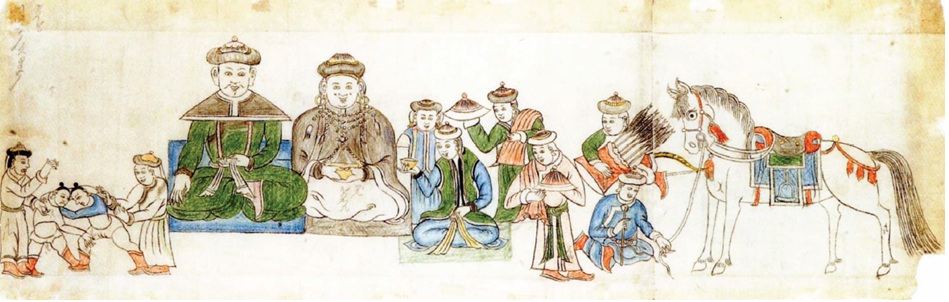
16th century painting of Abtai Sain Khan and his queen kept in the Zanabazar Museum of Fine Arts, Ulan Bator. Depicting wrestling, archery and horse riding.
Legends of the Arena: Kh. Bayanmonkh and the Spirit of Naadam
One of Naadam’s most iconic champions is Kh. Bayanmonkh, a wrestler from Uvs province who came to embody the spirit of the games. Beginning his Naadam career in 1962, Bayanmonkh went on to win more than 250 matches and claimed the championship title ten times — an unmatched record in modern Mongolian wrestling.
In 1972, he earned Mongolia’s first Olympic medal in freestyle wrestling, and even decades later, his legacy continues to inspire young athletes. For mature travelers fascinated by local heroes and sporting legends, his story offers a powerful window into Mongolia’s evolving identity.
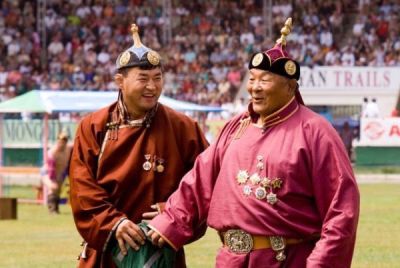
Sukhbat Avaasandan (left) Bayanmunkh Khorloo (right)
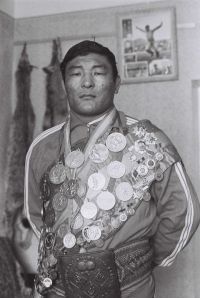
Champion Bayanmunkh 1972 (age 28)
Naadam Today: A Celebration of Living Heritage
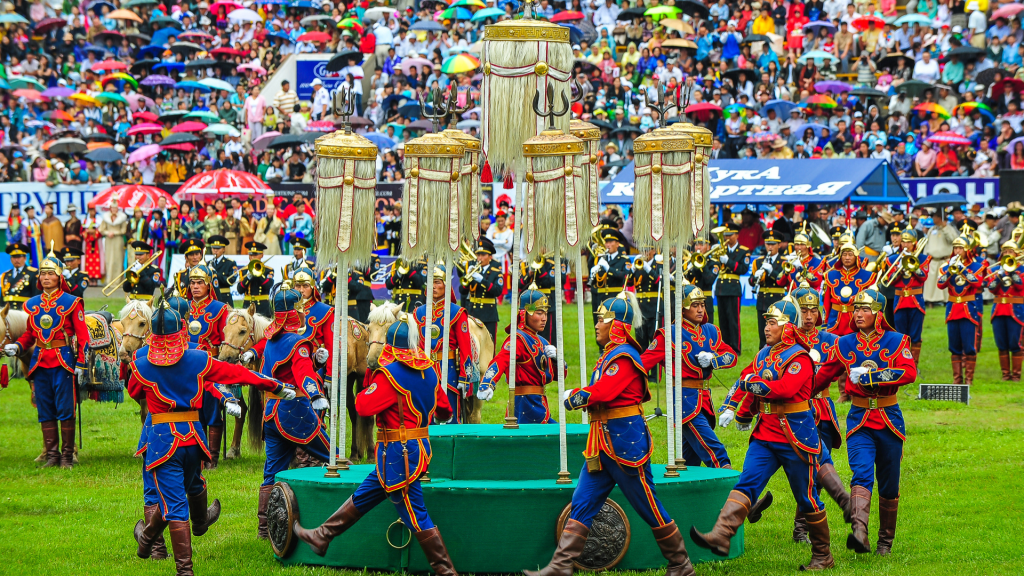
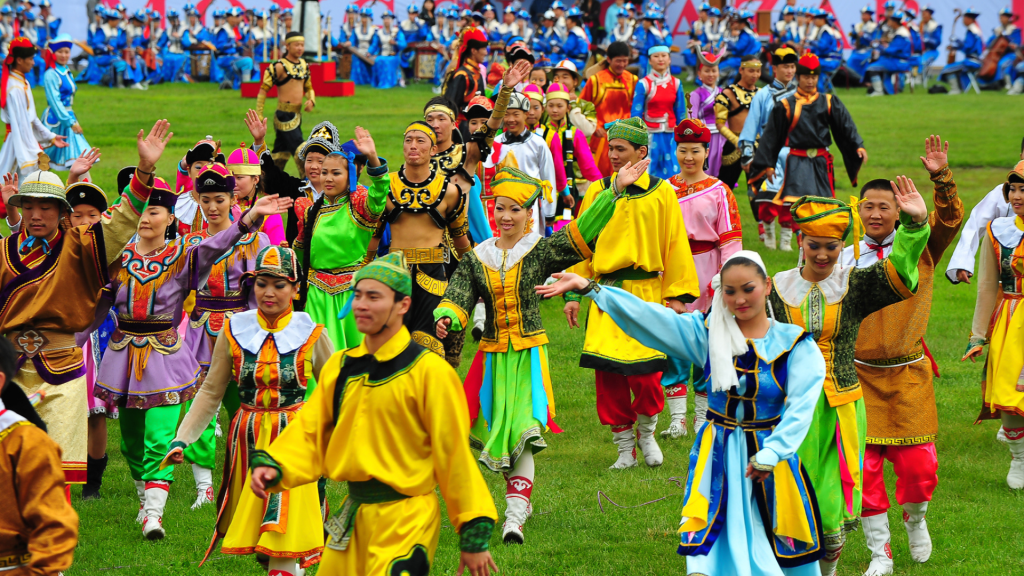
Naadam is now recognized by UNESCO as part of the Intangible Cultural Heritage of Humanity, and it remains one of the most powerful experiences for visitors on Mongolia luxury tours. In the capital, the opening ceremony includes Mongolian Honorary Guard parades and performances — while in the countryside, families gather in dusty stadiums and on grassy hillsides to cheer on local champions.
The Naadam I attended last year still lingers in my senses. I watched young jockeys — some as young as ten — race across the steppe, their voices rising in unison with the rhythm of hooves. Archers in vibrant deels (traditional Mongolian Garment took aim with calm precision. Wrestlers leapt into eagle-like salutes, ready to begin bouts with centuries-old rituals.
This is Naadam Festival 2025 — not just a photo opportunity, but a cultural immersion that speaks to the very essence of Mongolia. Whether part of a Mongolia private tour or a soft adventure Mongolia journey designed for comfort and depth, experiencing Naadam connects travelers to something far greater than themselves.
Learn more from UNESCO’s Naadam recognition as part of the Intangible Cultural Heritage of Humanity.
Planning Your Journey Around Naadam
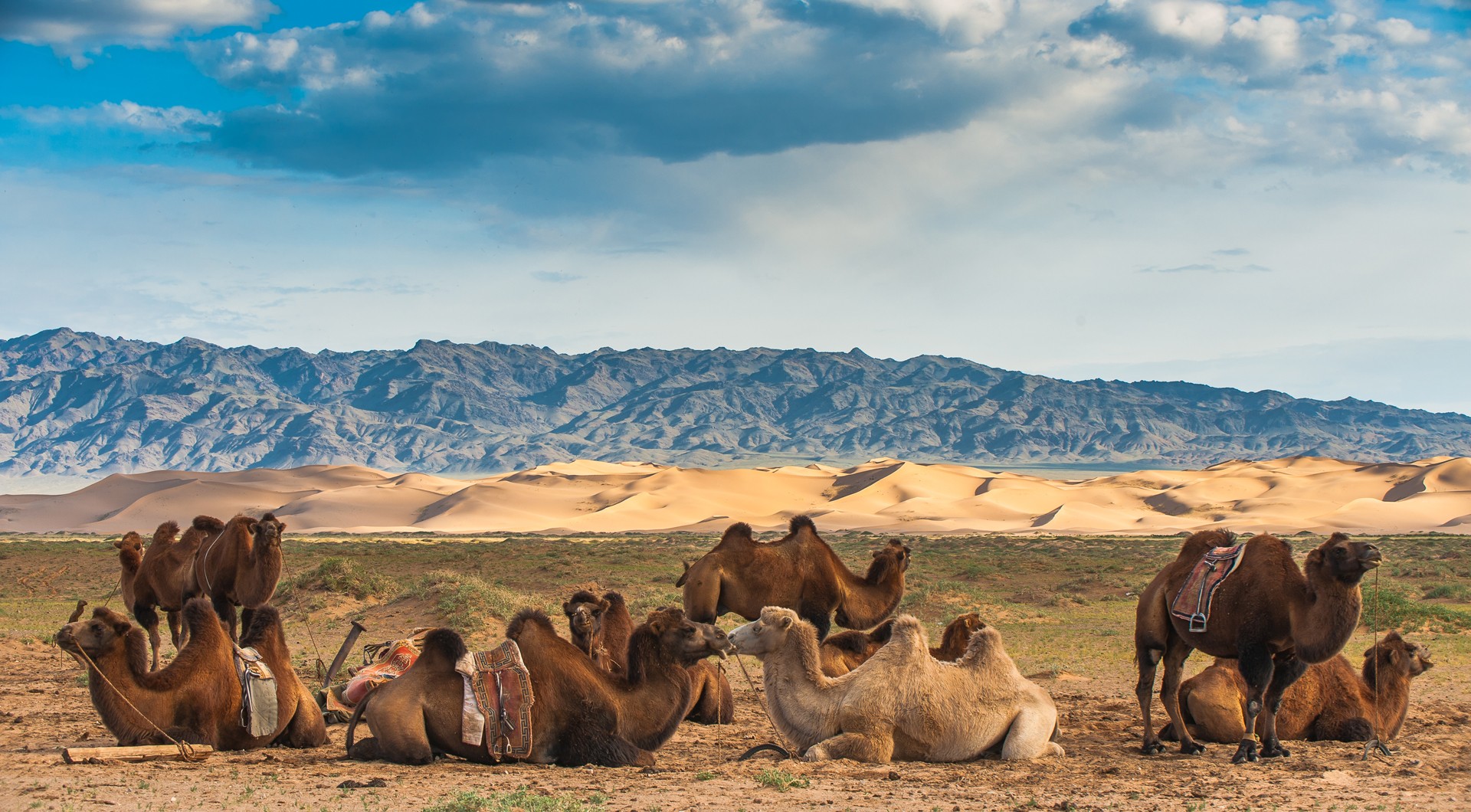
Many choose to build their Mongolia travel packages around the Naadam Festival, combining it with other highlights like Gobi Desert tours, horseback riding in Mongolia, visits to luxury ger (Mongolian Traditional Dwelling) camps nestled near Khuvsgul Lake or drinking tea and sharing a meal with Eagle Hunters in Western Mongolia. For those seeking a deeper understanding of nomadic heritage, journeys that also explore Mongolian Shamans or engage with reindeer herders in Mongolia offer further context to the culture behind the games.
For mature travelers Mongolia, Naadam provides an ideal blend of excitement and meaning — a time of national pride, community gatherings, and warm hospitality. It’s the perfect entry point into the rhythm of nomadic life, framed by rituals that have shaped the land for centuries.




Keep In Touch