
Table of Contents
Mongolian Religions: A Guide to Buddhism, Shamanism, and Spiritual Life
From the windswept steppes to the peaks of the Altai Mountains, Mongolia’s spiritual landscape has evolved over centuries. Today, it offers a rich blend of Buddhism in Mongolia, Shamanism in Mongolia, and Islam among Kazakh communities in the west. This blog explores the Mongolian religions that shape daily life, ceremonies, festivals, and worldviews across the country.
A Legacy of the Steppes: Buddhism in Mongolia
Tibetan Buddhism in Mongolia took root in the 16th century through royal patronage. Altan Khan, a descendant of Genghis Khan, invited the 3rd Dalai Lama to Mongolia and declared Buddhism the state religion. The spiritual lineage and monastic education systems were deeply influenced by Tibetan traditions, but adapted to Mongolian nomadic life.
Buddhism offered structured teachings, a spiritual framework, and a monastic education system that complemented the existing nomadic lifestyle. Temples and monasteries were often built near seasonal pastures and became centers of learning, ritual, and healing. The religion’s emphasis on compassion, mindfulness, and cyclical understanding of life harmonized well with traditional Mongolian values.
Today, institutions like Gandan Monastery in Ulaanbaatar serve as important religious and cultural hubs.
Pilgrims travel to sacred sites in Mongolia, such as the Amarbayasgalant Monastery and Erdene Zuu in Kharkhorin. These destinations blend architectural beauty with spiritual serenity.

Ancient Roots: Shamanism in Mongolia
Long before Buddhism, Mongolians practiced Tengerism, a form of animistic Mongolian Shamanism that revered sky spirits, ancestral forces, and nature’s power.
Shamanism developed in close relationship with the natural environment. In a land where survival depends on awareness of weather, animals, and land, reverence for sky, water, fire, and mountains became more than symbolic—it was essential. Spirits are believed to reside in every element of nature. Shamans (böö) serve as intermediaries, conducting rituals to maintain balance and seek guidance for herding, healing, and rites of passage.
Mongolia’s oral traditions, including epic storytelling and ancestral lore, are deeply influenced by shamanic cosmology. The worldview—divided into the Upper World (sky), Middle World (earth), and Lower World (spirit realm)—has informed not only spiritual practices but cultural understanding of the universe.
The revival of Shamanism in Mongolia has gained traction since the 1990s. In northern regions like Khuvsgul, Darkhad shamans still conduct traditional ceremonies near mountains and lakes. The Ovoo cairns seen throughout Mongolia represent places where locals offer gifts and prayers to the spirits of nature.

Mongolian traditional shaman performing a traditional shamanistic ritual with a drum and smoke in a forest during autumn afternoon. Ulaanbaatar, Mongolia.
The Western Influence: Islam Among Mongolian Kazakhs
In Bayan-Ulgii province, ethnic Kazakhs—Mongolia’s largest Muslim minority—practice Sunni Islam. Islam was introduced to the region centuries ago through cultural exchanges along the Silk Road. Today, mosques and madrasahs dot the province, and traditional practices are woven into family life, weddings, and holidays like Eid al-Fitr.
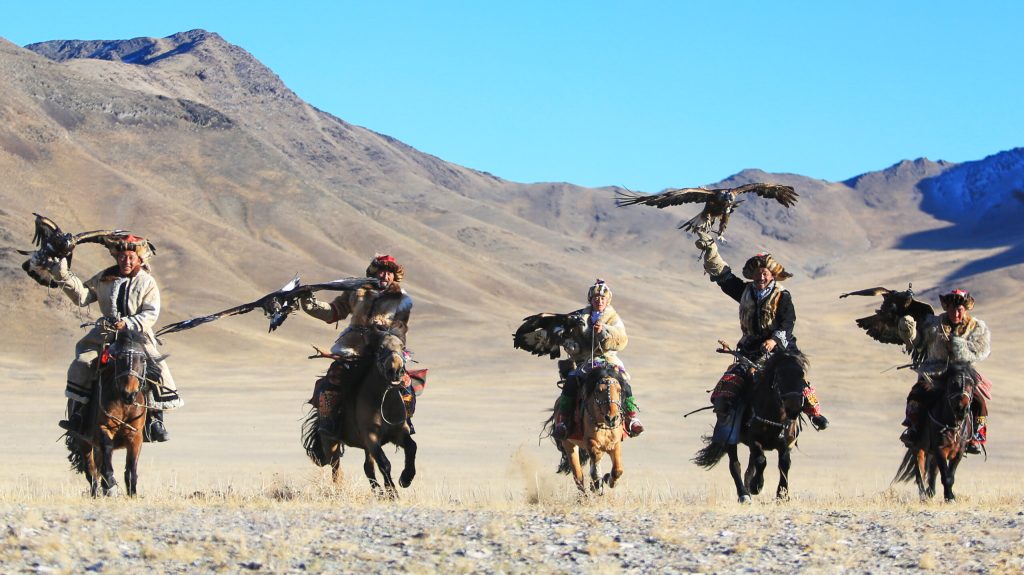
Despite being a minority, Kazakh Muslims in Mongolia maintain a vibrant cultural identity. Visitors to the region often witness the coexistence of faith and heritage, especially during local festivals and eagle hunting gatherings.
Syncretism and Coexistence
One of the most remarkable features of religion in Mongolia is the peaceful coexistence of diverse belief systems. Many Mongolians identify as both Buddhist and shamanist, participating in monastery rituals while maintaining ancestral and nature-based practices.
The country’s nomadic history fostered flexibility in spiritual expression. Faith was not confined to buildings—it traveled in saddle bags, was whispered in mountain winds, and offered to the spirits in fire and sky.
What Visitors Should Know
- Respect local customs: When visiting monasteries or sacred sites, dress modestly and avoid loud behavior. Always walk clockwise around stupas and prayer wheels.
- Ask before photographing rituals: Many spiritual practices are private. Permission is key.
- Participate meaningfully: Join a morning chanting ceremony at Gandan Monastery, or witness a shamanic fire ritual in the taiga with a local guide.
Conclusion
Understanding Mongolian religions reveals deeper dimensions of the country’s culture, resilience, and worldview. Whether lighting butter lamps in a monastery, offering a blue “khadag” scarf at an ovoo, or sharing tea with a Kazakh Muslim family, each moment reflects a living tradition. Faith in Mongolia is not just belief—it is embedded in movement, story, and sky.



Keep In Touch