Table of Contents
A river changes the way you experience Mongolia. From the road, you take in the sweep of a valley. With a fly rod in hand, you begin to notice its smaller details: the seam between fast and slow water, an insect on the surface, the shadow beneath an undercut bank.
Somewhere below could be a taimen, a predator that draws anglers halfway around the world. But fly fishing here offers more than the pursuit of one celebrated species. It means spending time with a river, learning from experienced guides, and discovering landscapes that reward a slower approach.
At WildMongolia, we offer two ways to experience these waters: a lodge-based fishing journey in Khuvsgul and a moving riverside expedition in Khentii.
The Fish that Brings Anglers to Mongolia
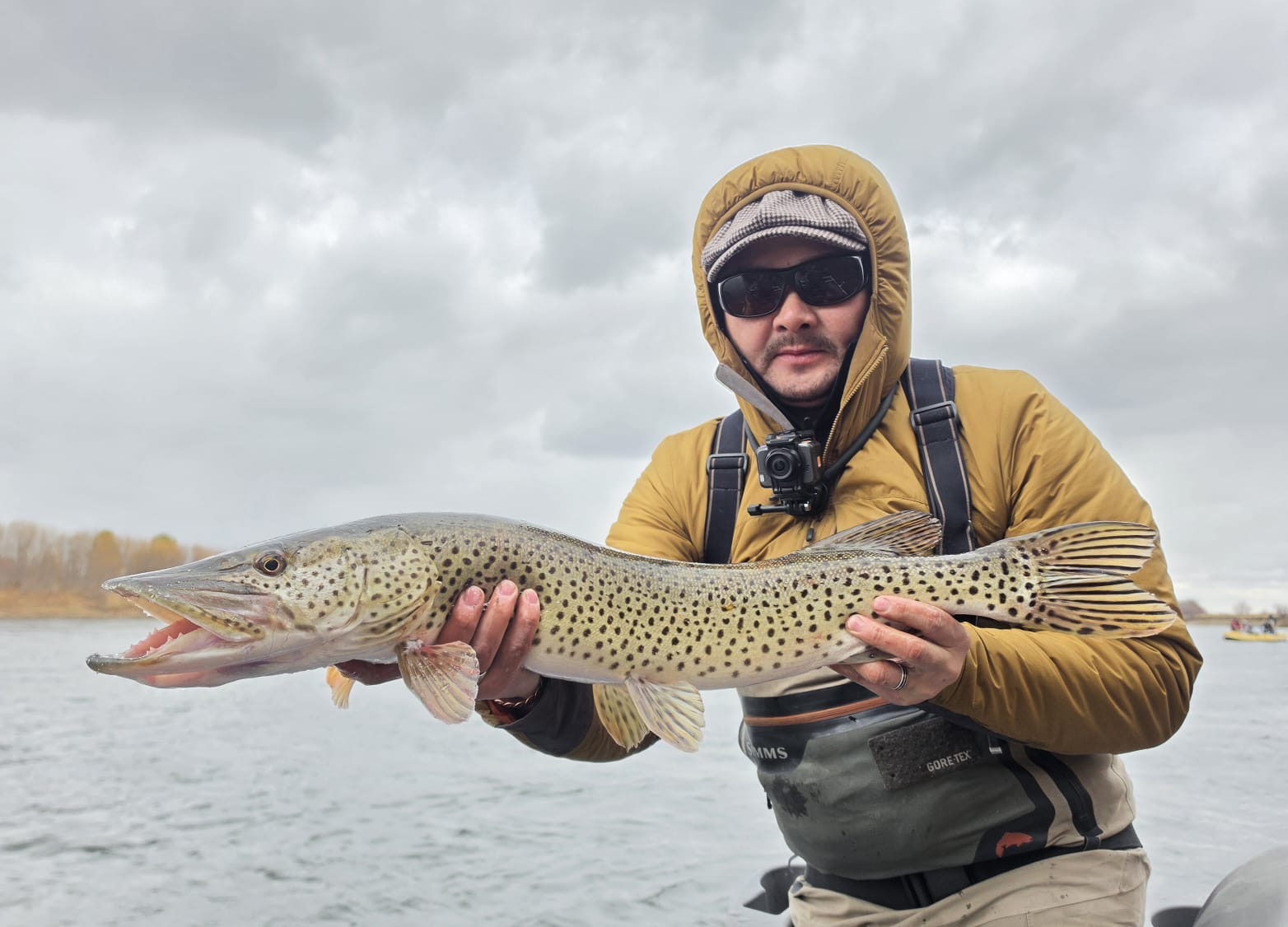
Siberian taimen are among the world’s largest salmonids, the family that includes salmon and trout. For many anglers, the possibility of encountering one is reason enough to visit Mongolia.
Their feeding habits add to the fascination. Adults prey on fish but can also take small mammals that enter the water. This explains an unusual feature of taimen fishing: the use of large mouse imitations, worked across the surface to suggest a swimming animal. Streamers resembling prey fish offer another approach.
A strike is never guaranteed. Taimen fishing can involve repeated casts, careful observation, and long periods without a take. Experienced guides help anglers interpret the water and adapt their techniques, but patience remains essential.
The uncertainty is part of the appeal. You are responding to a living river, not following a script.
More than Taimen
Mongolia’s rivers also offer opportunities to pursue lenok and grayling, giving anglers reasons to bring lighter tackle alongside their taimen equipment.
Dry-fly fishing changes the rhythm of a day. Rather than concentrating entirely on deeper pools and large predators, you might watch for feeding activity at the surface, select an insect imitation, and work through a promising run.
That variety makes a fishing journey more rounded. Experienced anglers can switch techniques, while those developing their skills have more to discover than the pursuit of a single species.
It also encourages a different measure of success. A well-presented fly, a newly understood stretch of water, or advice from a guide can become as memorable as the catch itself.
Seeing Mongolia from the River
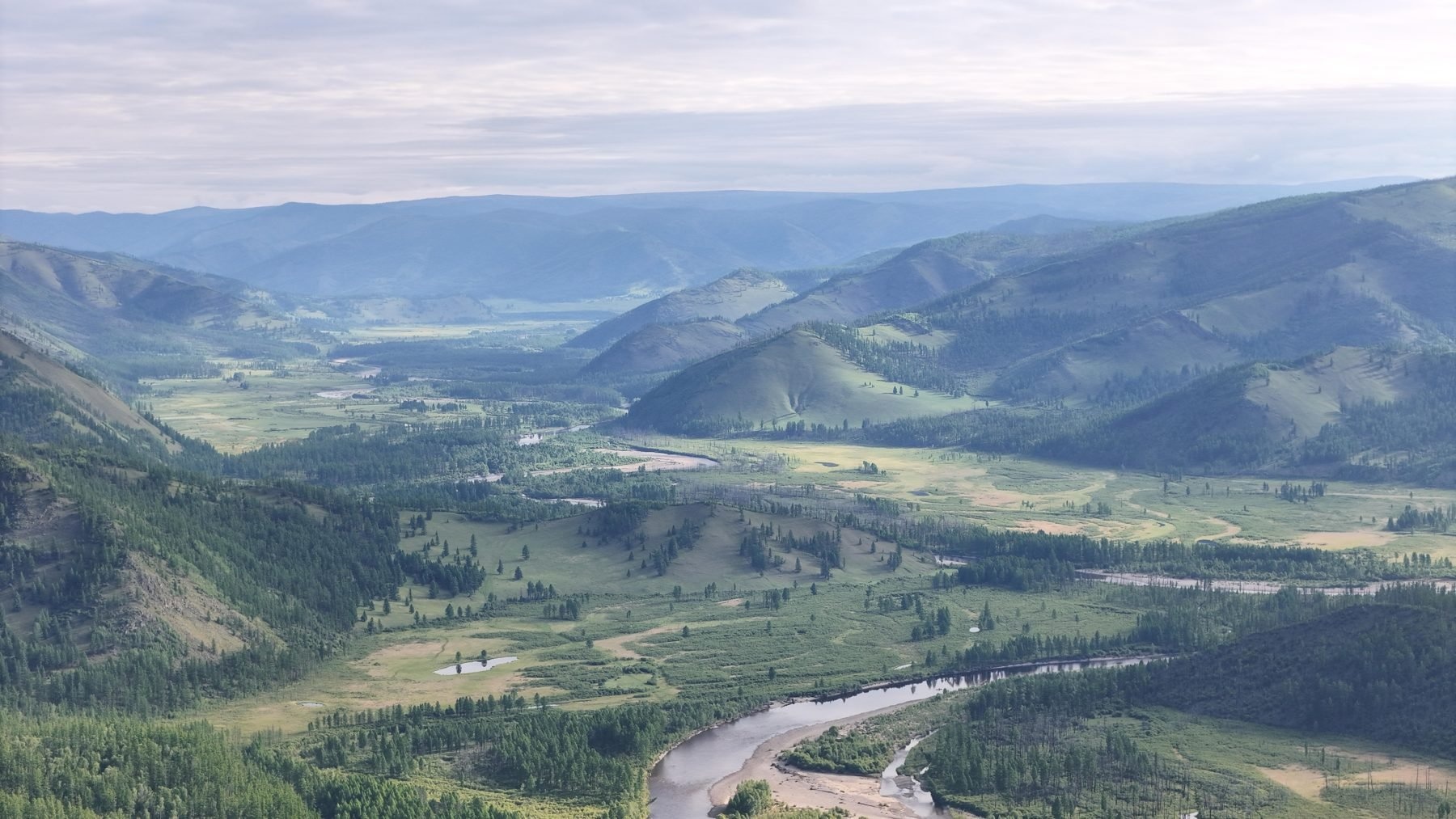
Mongolia is often pictured as open grassland, but its fishing regions reveal a more varied country. Northern rivers pass through larch forests and wooded valleys, while northeastern waters wind through forest-steppe landscapes.
Exploring by boat changes your perspective. A bend conceals the next stretch; a gravel bank becomes a place to stop and study the current. Staying beside the water allows those details to accumulate over several days.
Weather becomes part of the experience, too. Rain can alter river levels and clarity, while cold mornings call for warm layers. Guides adjust fishing plans to conditions, making flexibility more valuable than a rigid schedule.
Fishing with the Future in Mind
Mongolia’s international fly-fishing scene is contemporary, rather than an ancient nomadic tradition. An important part of its development is the relationship between recreational fishing and conservation.
Taimen are classified as Vulnerable and are slow-growing fish. Responsible fishing therefore requires more than releasing a catch: permits, appropriate tackle, careful handling, and respect for local restrictions all matter.
Requirements vary between rivers and operators. Travelers should understand the rules for their chosen waters rather than assume that one standard applies everywhere.
Choosing a well-managed journey means recognizing that the river’s long-term health matters more than a photograph or catch tally.
Khuvsgul — Uur and Arig Rivers — Lodge-based boat fishing
For travelers who want extended time on the water with a comfortable base, our nine-day, eight-night Khuvsgul program includes seven full fishing days.
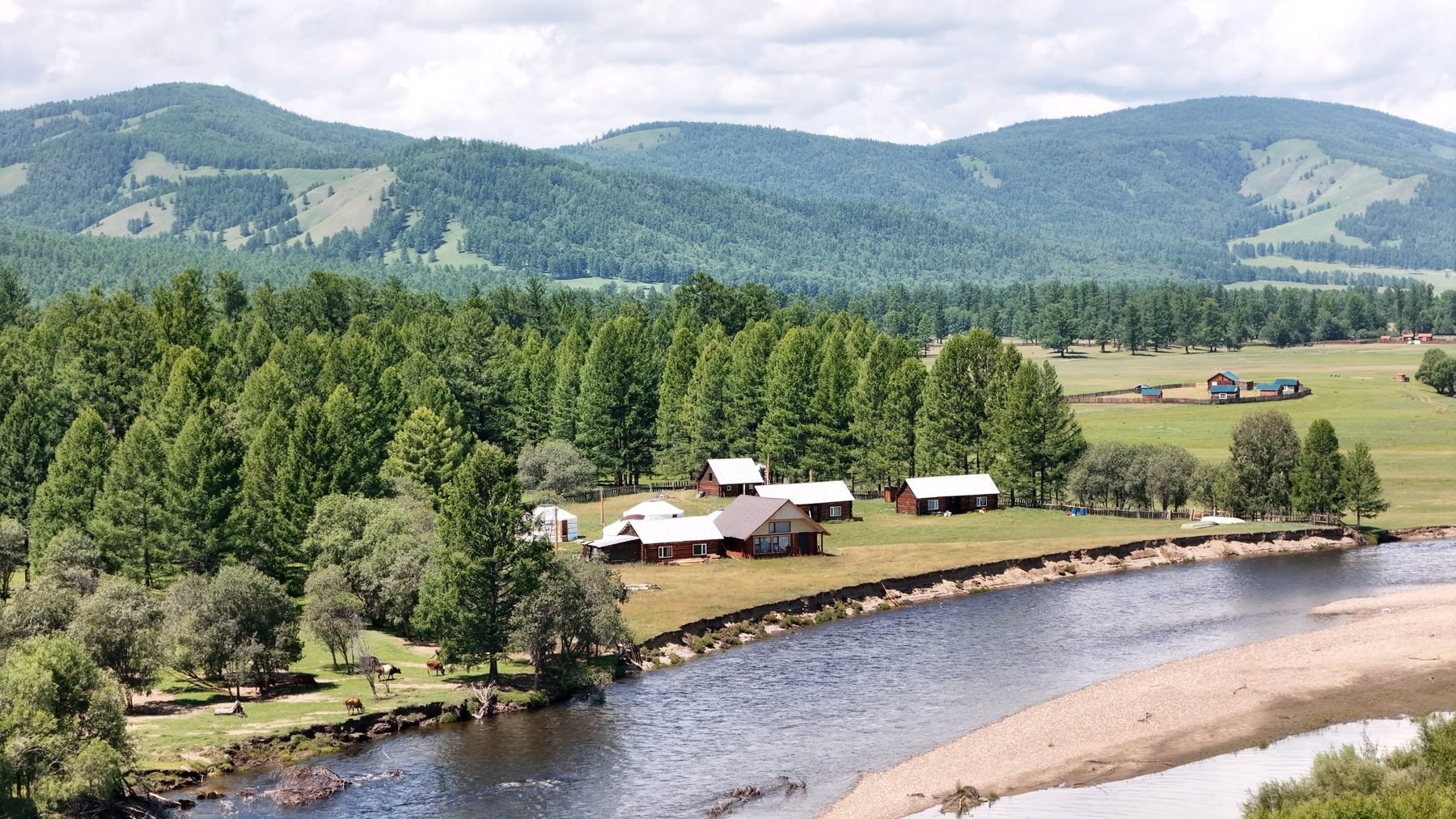
A riverside ger lodge overlooking the Uur provides the starting point. The program combines jet-boat access on the Uur and nearby rivers with guided drift-boat fishing on the Arig, with plans adjusted to river conditions.
Target species include taimen, lenok, and Arctic grayling, with occasional burbot. Anglers can alternate between heavier taimen tackle and lighter dry-fly fishing. Single barbless hooks are required, and every taimen must be released.
Heated gers with private bathrooms and hot showers provide comfort between fishing days. A shared dining hall offers a place to eat, exchange stories, and prepare for another day.
This option suits anglers who value sustained river exploration without packing up accommodation each morning.
Khentii — Onon and Balj Rivers — Expedition-style float fishing
Our Khentii program takes a more mobile approach, with five guided fishing days exploring the upper Onon, Balj, and their tributaries.
Fishing combines rafting, drift boats, and wading, introducing different river stretches as the expedition progresses. Target species include Siberian taimen, lenok, Amur pike, and Amur trout.
Local fishing guides lead the experience, while riverside camps keep travelers close to the surrounding forest-steppe landscape. Unlike the Khuvsgul journey, accommodation moves with the expedition rather than serving as a fixed base.
This program suits travelers who enjoy camping and the rhythm of moving through a river system. The total fishing-only itinerary length, including transfers, will be confirmed during planning.
Find your way onto the Water
Each program offers a different balance of comfort, access, and immersion. You might prioritize helicopter excursions to remote waters, a full week of fishing from a riverside lodge, or the changing scenery of a camping expedition.
We will also discuss your experience and how fishing fits into the wider journey.
You do not need to arrive with a record fish in mind. Curiosity, patience, and a willingness to learn are a better beginning. Mongolia’s rivers offer plenty of reasons to pay attention.