
Table of Contents
Wild Horses of Mongolia: The Przewalski’s Horse in Khustai National Park
In the grasslands of central Mongolia, a herd of dun-colored horses grazes under the open sky. These are Przewalski’s horses, or takhi as they are known in Mongolia. Recognized as the world’s only truly wild horse species, they represent a rare conservation success story. Once extinct in the wild, they have returned to their native steppe thanks to long-term international efforts. Today, they can be seen in Mongolia’s Khustai National Park, offering travelers a unique chance to observe wild horses in Mongolia, in their natural environment.
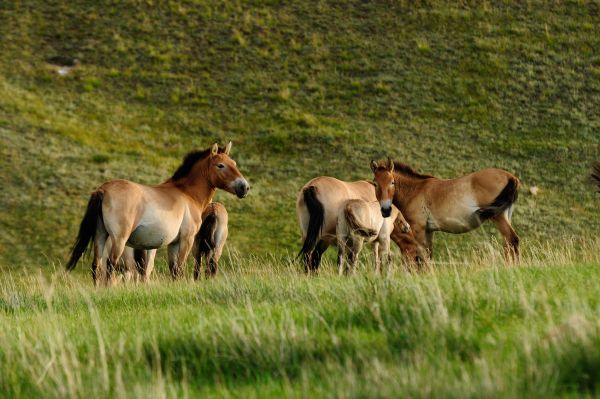
Several adult Przewalski’s horses and foals stand together in the lush grasslands of Khustai National Park. This close-up captures the familial structure and natural behavior of the world’s last wild horse species.
The World’s Only True Wild Horse
The Przewalski’s horse (Equus ferus przewalskii) is distinct from domestic horses, both physically and genetically. These horses have never been domesticated. They are smaller and stockier than modern riding horses, with short, upright manes, a dark stripe down the back, and no forelock. They also have 66 chromosomes, compared to 64 in domestic horses.
In the wild, Przewalski’s horses form social groups led by a dominant stallion, with several mares and their foals. Other stallions form bachelor herds. These animals are well adapted to Mongolia’s climate, surviving on coarse steppe grasses and using their sharp senses to detect predators and navigate the open landscape.
Unlike domestic horses, Przewalski’s horses maintain a stronger flight instinct and tend to avoid close contact with humans. Their natural behaviors, shaped by centuries of wild existence, make observing them in their habitat a distinctly different experience from seeing horses in managed environments.
From Extinction to Conservation Success
By the 1960s, Przewalski’s horses had disappeared from the wild due to habitat loss, hunting, and competition with livestock. A few individuals remained in zoos, forming the basis of a global breeding program. All Przewalski’s horses alive today descend from just twelve animals.
In the early 1990s, Mongolia launched a reintroduction effort with support from international organizations. Khustai National Park was chosen as the primary site. The first group of horses, bred in European zoos, was introduced in 1992. Over the following years, additional horses were brought in and released. Today, there are over 1,900 Przewalski’s horses worldwide, with several hundred wild horses living in Mongolia.
Conservation efforts focused on carefully managing breeding, ensuring genetic diversity, and protecting the horses’ habitat. The cooperation between scientists, conservationists, and local communities played a crucial role in the program’s success. The horses are now monitored to ensure their numbers remain stable and that their natural behaviors are preserved.
For more on the species, see the IUCN Red List entry on Przewalski’s Horse.
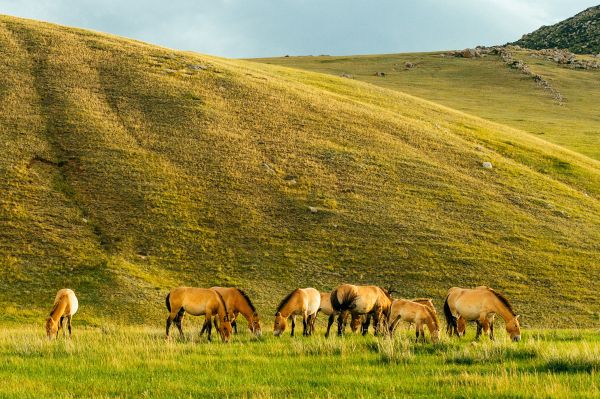
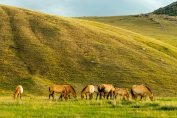
A group of Przewalski’s horses, also known as takhi, peacefully graze at the base of a gently sloping hill in Khustai National Park. This protected area west of Ulaanbaatar is the most reliable place to see Mongolia’s wild horses in their natural habitat.
Khustai National Park: A Living Sanctuary
Located about 100 kilometers west of Ulaanbaatar, Khustai National Park is the best place to see wild horses in Mongolia. The park covers more than 50,000 hectares of grasslands, hills, and birch forests. Over 400 Przewalski’s horses live here. Visitors often see them grazing in groups, led by a stallion, with foals and mares in close proximity.
Khustai is also home to red deer, marmots, foxes, and over 200 species of birds. Birdwatchers may spot golden eagles, vultures, or the rare saker falcon. The park’s varied terrain supports a balanced ecosystem, making it an excellent destination for those interested in biodiversity.
Visitors can also explore ancient archaeological sites located within the park. Petroglyphs, burial sites, and stone monuments are scattered across the hills, adding cultural interest to a wildlife-focused journey.
Learn more about travel logistics and accommodations at WildMongolia’s Khustai Day Tour Page.
How and When to See the Takhi
Khustai is easily accessible from Ulaanbaatar and is suitable for day trips or overnight stays. Local rangers and guides help track the horses and increase the chances of spotting them. The park is open year-round, but the best viewing conditions are between May and October, when the weather is milder and the roads are easier to navigate.
The best times to see Przewalski’s horses are early morning and late afternoon, when the animals come down from higher ground to graze and drink. During the middle of the day, they often rest in shaded areas, making them harder to find.
Visitors can explore the park in 4×4 vehicles and on short guided hikes. It is important to observe the animals from a distance. Binoculars and zoom lenses are useful for getting a closer look without disturbing them. Patience and silence increase the likelihood of observing natural behaviors.
Park facilities include a visitor center with educational displays about the horses and the reintroduction project. Overnight stays in nearby ger camps offer additional opportunities to experience sunrise and sunset excursions, when the chances of sightings are highest.
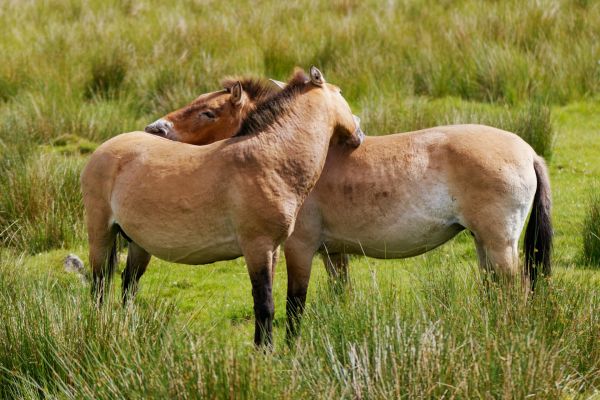
Two wild Przewalski’s horses in a moment of close contact. Known for their strong herd bonds, these rare animals are among the last remaining wild horses in the world.
A Thoughtful Experience for Travelers
Watching wild horses in their native environment is a meaningful experience. It connects visitors with Mongolia’s unique wildlife and landscapes. For those interested in conservation and nature, it is a valuable part of their journey.
As part of a high-end travel itinerary, guests can visit Khustai National Park with added comfort: well-organized logistics, experienced guides, and comfortable ger accommodations near the park. This combination of convenience and access to nature makes the experience especially appealing to those looking for something authentic and well-managed.
Private tours often include catered meals, access to exclusive viewpoints, and flexible timing for wildlife viewing. Some experiences may also involve cultural activities such as traditional music performances or workshops with local artisans, adding richness to the overall journey.
Explore similar wildlife encounters across Mongolia through our Wildlife Journeys Collection.
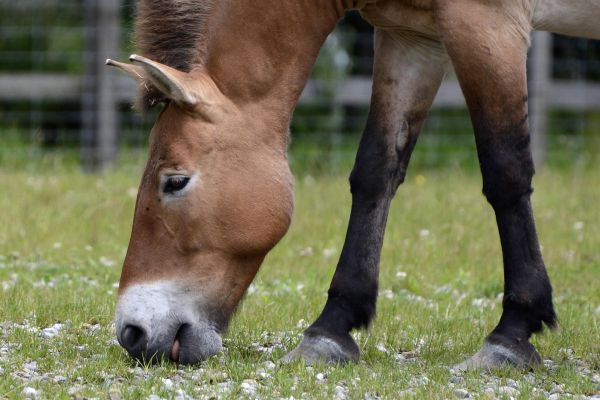
A detailed close-up of a Przewalski’s horse grazing. Its upright mane, dun coat, and dark limbs reflect the physical traits that distinguish it from domesticated horses.
Preserving Mongolia’s Natural Heritage
The story of the Przewalski’s horse is one of recovery. Once extinct in the wild, these horses now roam freely again in their homeland. Khustai National Park plays a key role in this ongoing success.
For those who want to travel to Mongolia with purpose, visiting Khustai offers more than a sightseeing stop. It provides insight into conservation work and the importance of protecting natural ecosystems. Seeing the horses in this environment leaves a lasting impression.
Conservation-focused travel not only supports the protection of rare species but also contributes to local economies and education. The presence of informed, respectful visitors reinforces the value of wildlife and helps sustain ongoing efforts.



Keep In Touch