
Table of Contents
A Legacy That Soars
Eagle hunting is more than a tradition—it is a living testament to courage, heritage, and an unbreakable bond with the natural world. In Mongolia’s remote western frontier, where the wind carries the echoes of centuries past, this ancient practice remains a symbol of strength and reverence.
Three-time Golden Eagle Festival Champion Shaymurat Ashkabil, a master of the art with over 30 years of experience, invites you to witness the essence of eagle hunting. From the precise techniques of the hunt to the deeply moving ritual of releasing an eagle back into the wild, Shaymurat’s demonstrations embody both skill and spirit. Beneath the vast Mongolian sky, you’ll witness a tradition that is both timeless and untamed—a connection between hunter and eagle that stirs the soul.
Recognized by UNESCO as an Intangible Cultural Heritage of Humanity, golden eagle falconry is a remarkable testament to the harmony between humans and nature. It is a craft that demands patience, precision, and above all, profound respect for these magnificent birds.
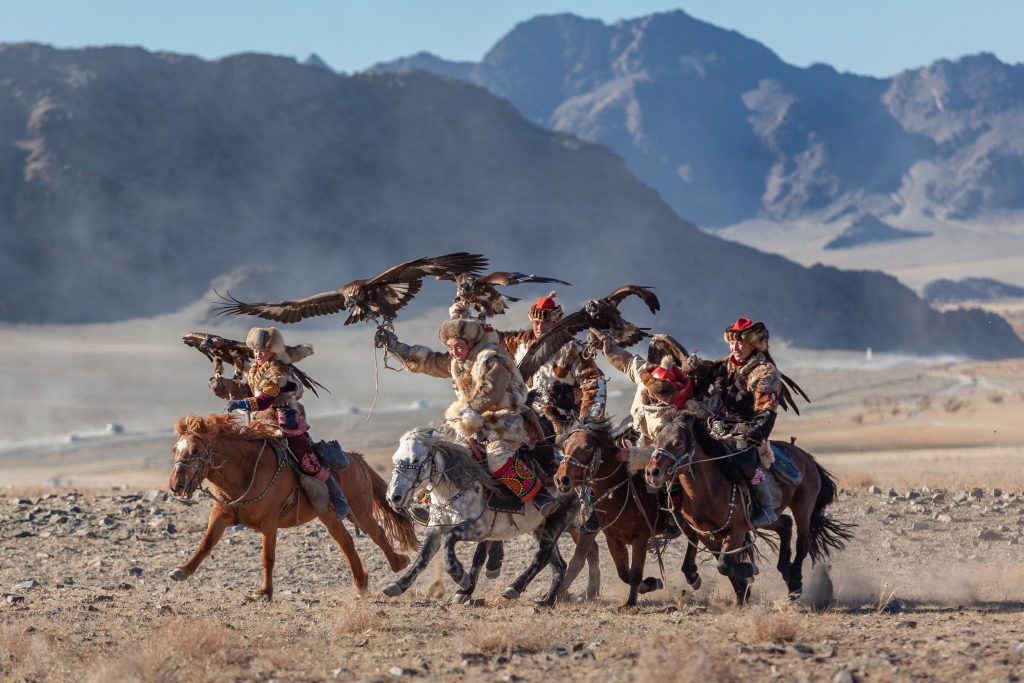
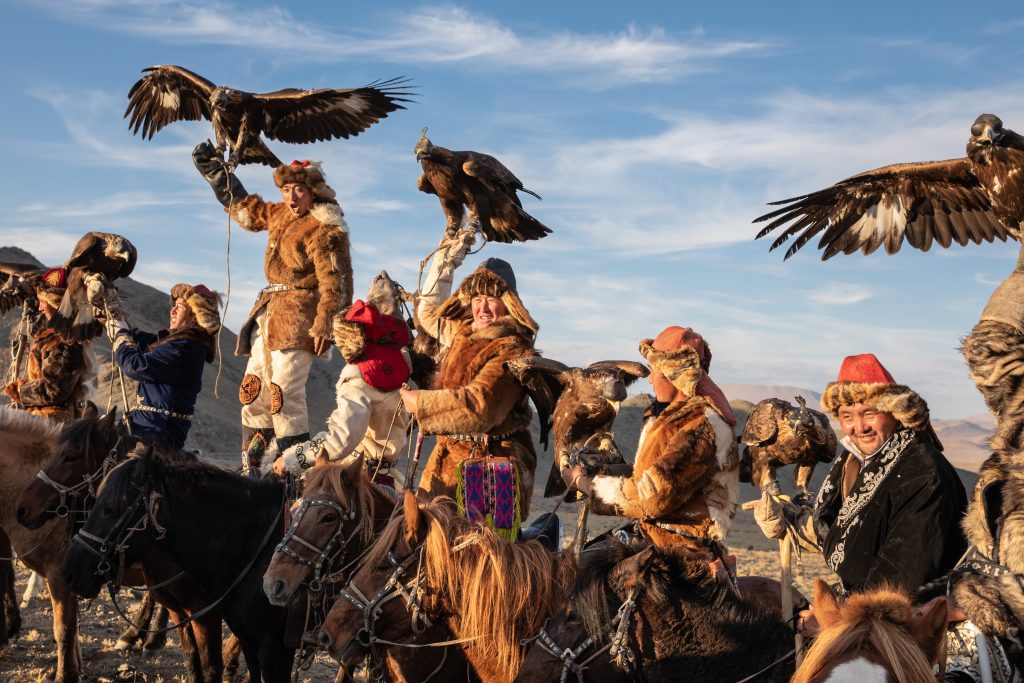
Group of eagle hunters on horseback running in the steppes
Origins of a Timeless Art
In Kazakh culture, eagle hunting is known as Bürgedchin. For centuries, the nomads of the Altai Mountains have relied on golden eagles to navigate the harsh winters, tracking prey across the snow-covered steppes. Today, this ancient tradition thrives in Mongolia’s Bayan-Ölgii province, where Kazakh hunters pass down their knowledge through generations, ensuring the legacy endures.
The journey begins in the rugged Altai peaks, where hunters carefully select fledgling eagles from their nests. Only the strongest, most independent birds are chosen—eagles that have already mastered flight and begun hunting on their own. This selective process maintains the delicate balance of the ecosystem while forging the first step in a sacred partnership between hunter and bird.
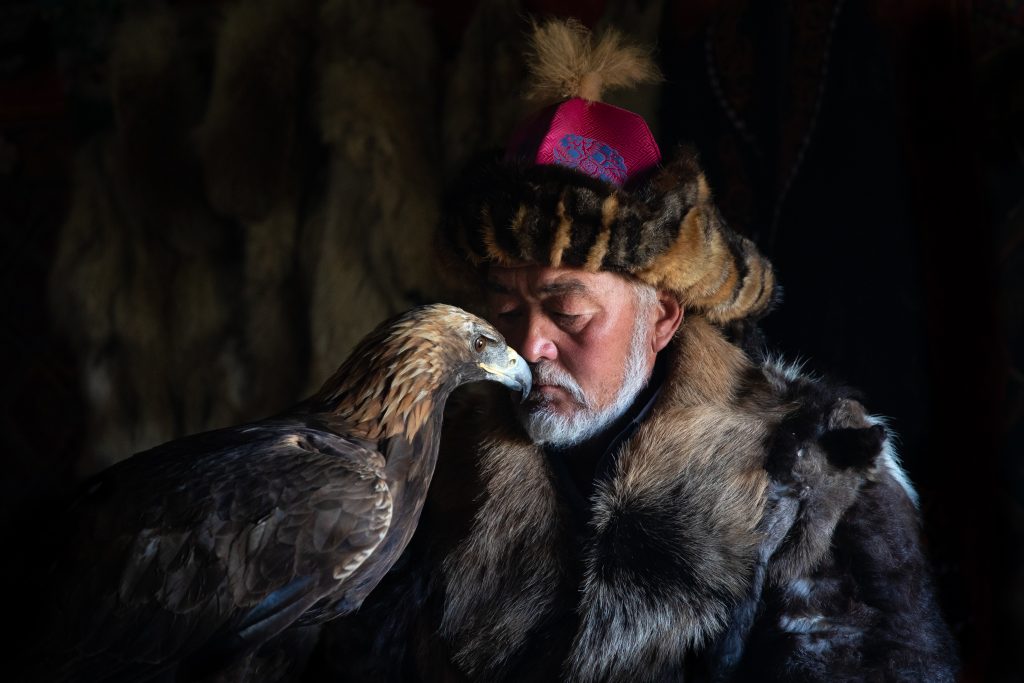
Decorated Champion Shaimurat with his Eagle
Building the Bond: Training the Eagle
Unlike eagles raised in captivity, those taken from the wild exhibit sharper instincts and a calm disposition, making them ideal for training. They retain their natural hunting prowess and, when released years later, seamlessly reintegrate into the wild. In contrast, eagles taken as chicks often struggle with independence and can develop problematic behaviors, such as attacking livestock or even small children upon release.
Training an eagle is a slow, deliberate process built on trust and mutual respect. Hunters whisper to their eagles, offering food by hand, and resting them on handcrafted perches. Over time, an unbreakable bond forms. The eagle learns to recognize the hunter’s voice, responding with unwavering loyalty.
Hunting drills refine the eagle’s skills. Wearing fur coats and using decoy prey, trainers teach the birds precision and control. With each graceful dive from great heights, the eagle hones its mastery, proving itself as nature’s most formidable hunter.
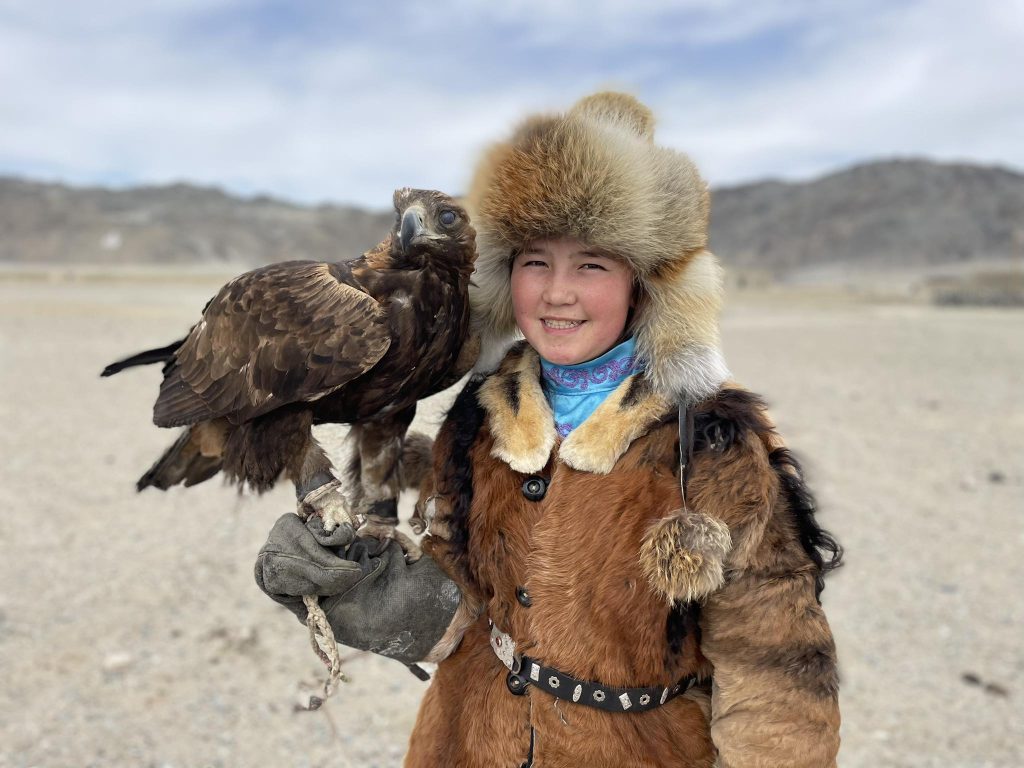
Young Eagle Huntress with her Eagle
The Hunt
Hunting preparations start in late summer, with the eagle’s diet carefully adjusted to sharpen its senses and refine its physical abilities. A well-balanced eagle exhibits keen judgment, raw power, and incredible speed, essential traits for hunting in the harsh conditions of winter. Overfeeding dulls the bird’s instincts, while underfeeding compromises its stamina, making balance critical.
Eagle hunting takes place during the cold months when snow blankets the landscape, making it easier to track animals like foxes, hares, and small deer. Mounted on horseback, the hunter ventures into the icy expanse, their eagle perched regally on their arm. From altitudes of up to 1,000 meters, the eagle’s keen eyesight locks onto prey. In a flash of wings and talons, the hunt concludes with breathtaking efficiency. Each successful capture is not merely a demonstration of skill but a celebration of the harmony between hunter and eagle.

Kazakh Nomad Eagle Hunters
Eagle releasing ceremony
Perhaps the most poignant chapter of eagle hunting is its conclusion. After 6 to 8 years of partnership, the hunter releases the eagle back into the wild. This act of reverence honors the bird’s role in the hunter’s life and ensures it has the opportunity to breed and contribute to its natural population. This ritual underscores the Kazakh people’s deep respect for nature and their commitment to preserving the balance of the ecosystem.
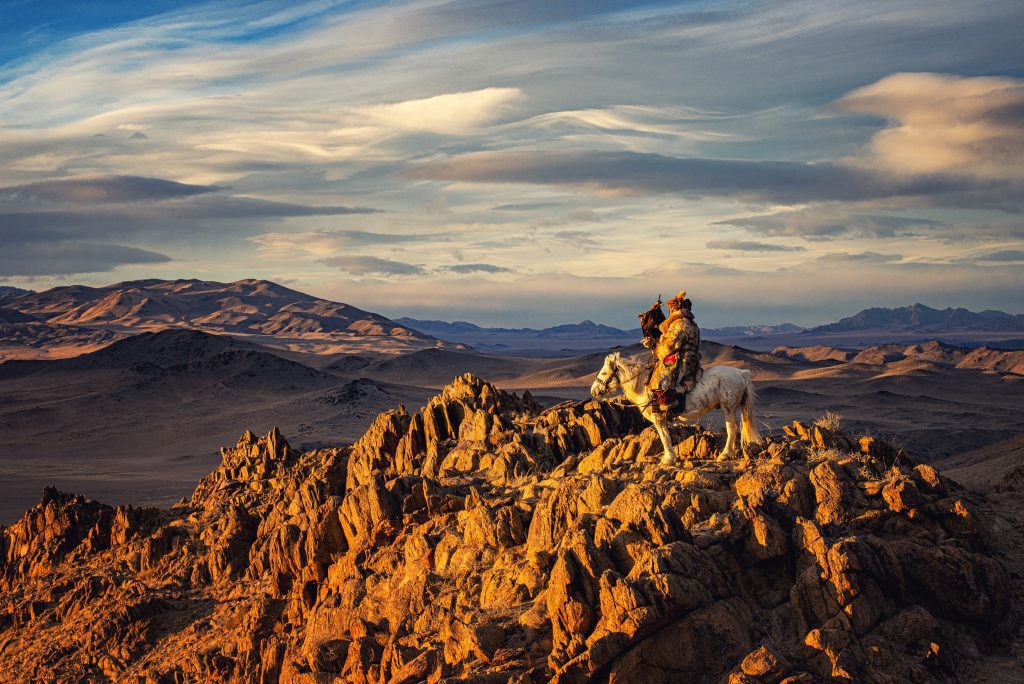
Shaimurat on a cliff with his Eagle
Cultural Legacy
Eagle hunting, once a vital means of survival, has grown into a celebrated cultural tradition that captivates people worldwide. The annual Golden Eagle Festival in Bayan-Ölgii is a vivid celebration of this heritage, showcasing the precision, artistry, and devotion of Kazakh hunters. Visitors are drawn to this spectacular event, eager to witness the remarkable bond between humans and eagles.
One of the most respected figures in this community is Shaymurat Ashkabil, a three-time Golden Eagle Festival champion. With over 30 years of experience, Shaymurat’s demonstrations of eagle training, hunting, and releasing offer a rare glimpse into the heart of this tradition. His stories echo across the mountains, connecting past and present and inspiring awe in all who hear them.
Eagle hunting is a tradition but at the same time, a living legacy of respect, courage, and a relationship with the world of nature. As visitors from around the world gather to witness this stunning practice, they ensure that this will live for generations to come. On the vast snow-covered steppes of western Mongolia, the eagle’s call resounds, bearing in it the spirit of an old art.
With every stride upon the earth and every wingbeat in the sky, they carry the weight of history and the soul of culture.







Keep In Touch