
Table of Contents
Arriving at The 1000 Camel Festival
Every year, the festival takes place in Umnugovi province, about 580 km (360 miles) from Ulaanbaatar. I always look forward to the journey there. The drive shifts from the city’s noise to the simplicity of the countryside. With every kilometer, I feel more connected to the land, knowing the festival and its traditions are just ahead.
When I arrive, Mongolia’s traditions are on full display. Though the Gobi Desert is often associated with the event, it actually takes place near Dalanzadgad, about 20-30 km from the city, in a venue traditionally used for horse races.
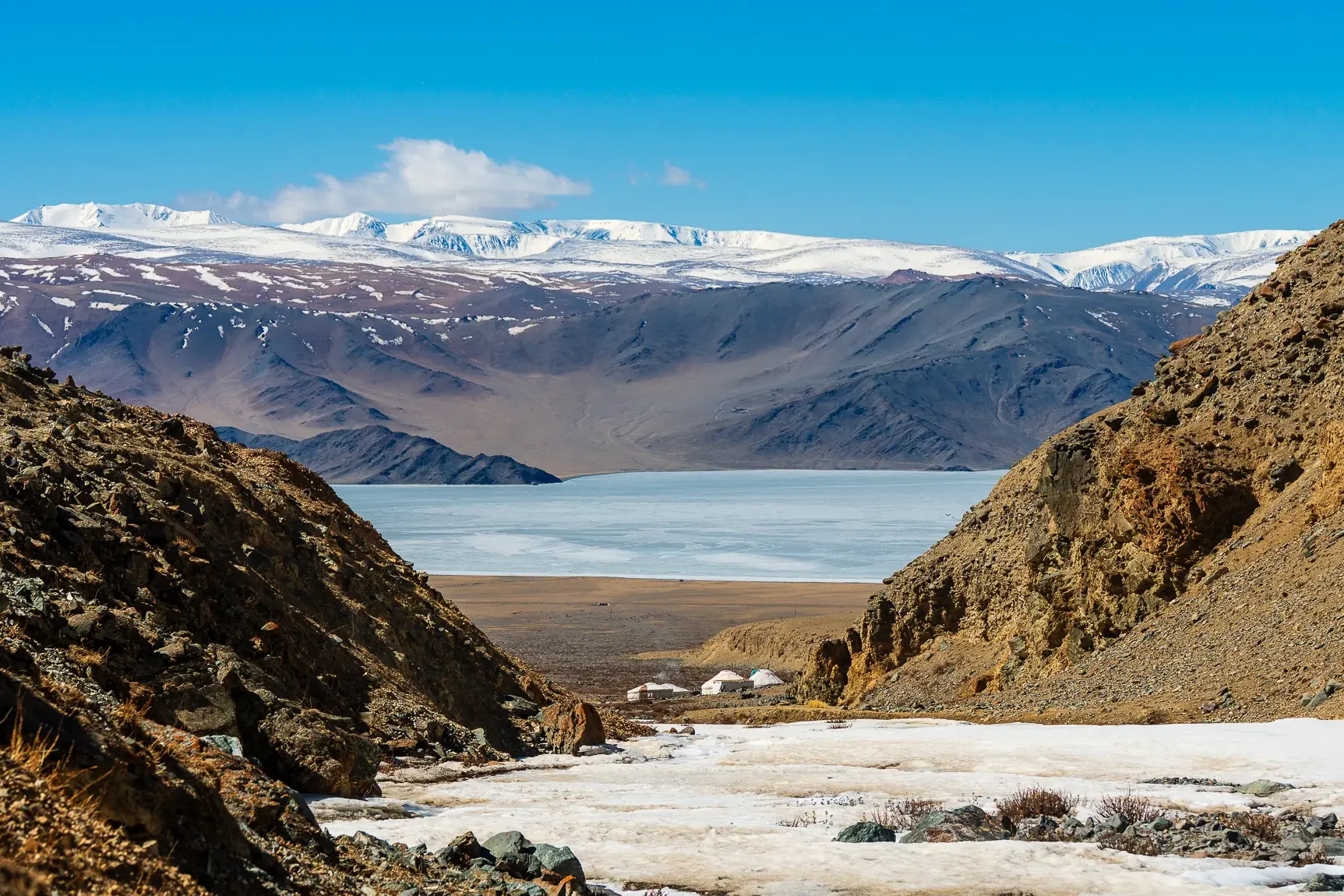
The winter air hovers around -3°C during the day, dropping to -18°C at night, carrying the sounds of chatter and the occasional call of a camel. While the cold is typical of a Mongolian winter, it’s more manageable than expected, allowing everyone to fully enjoy the festival. The sight of camels, their thick fur dusted with frost, standing in the open is striking and adds to the atmosphere.
I’m reminded of my first childhood ride on a camel — the thrill as the animal rose beneath me, intimidating yet exciting, quickly becoming second nature. Watching young riders confidently guide their camels through the festival’s races, I see that same bond between human and animal, shaped over centuries of nomadic life.
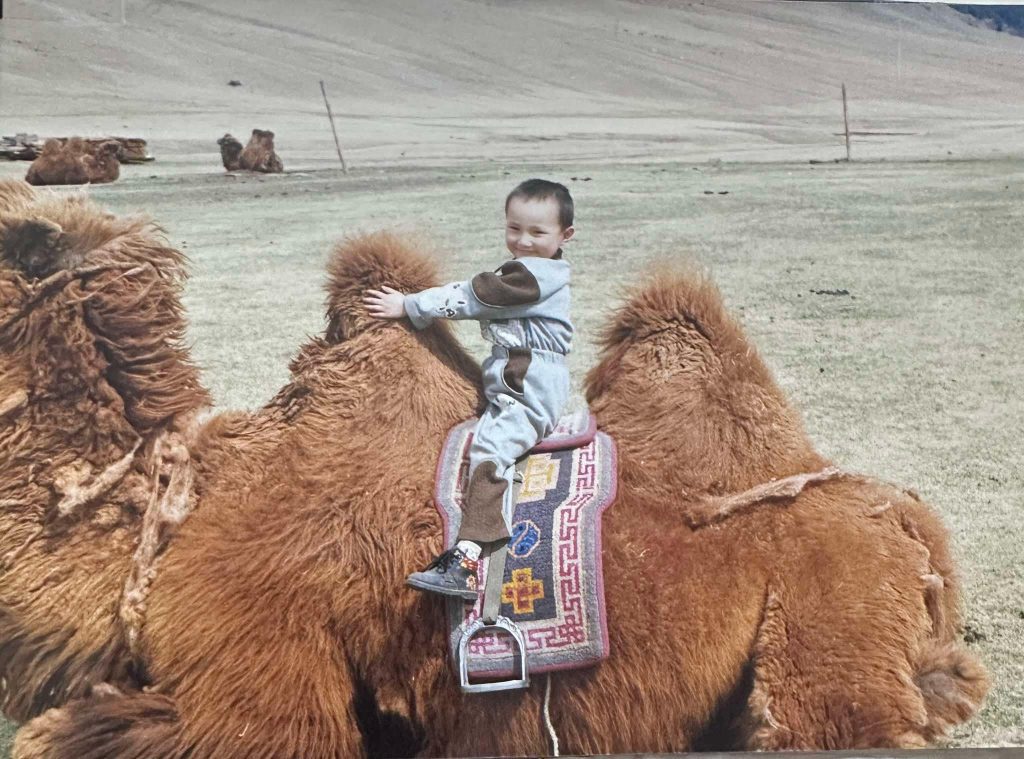
Jamsranjav on a camel age 4
Showcasing heritage and talent
The day before the festival officially begins, locals from different soums (districts) gather for Temeechid Duulj Bainaa (“Camel Herders Singing”). More than just a singing competition, the event showcases traditional dance, musical performances, and various artistic expressions.
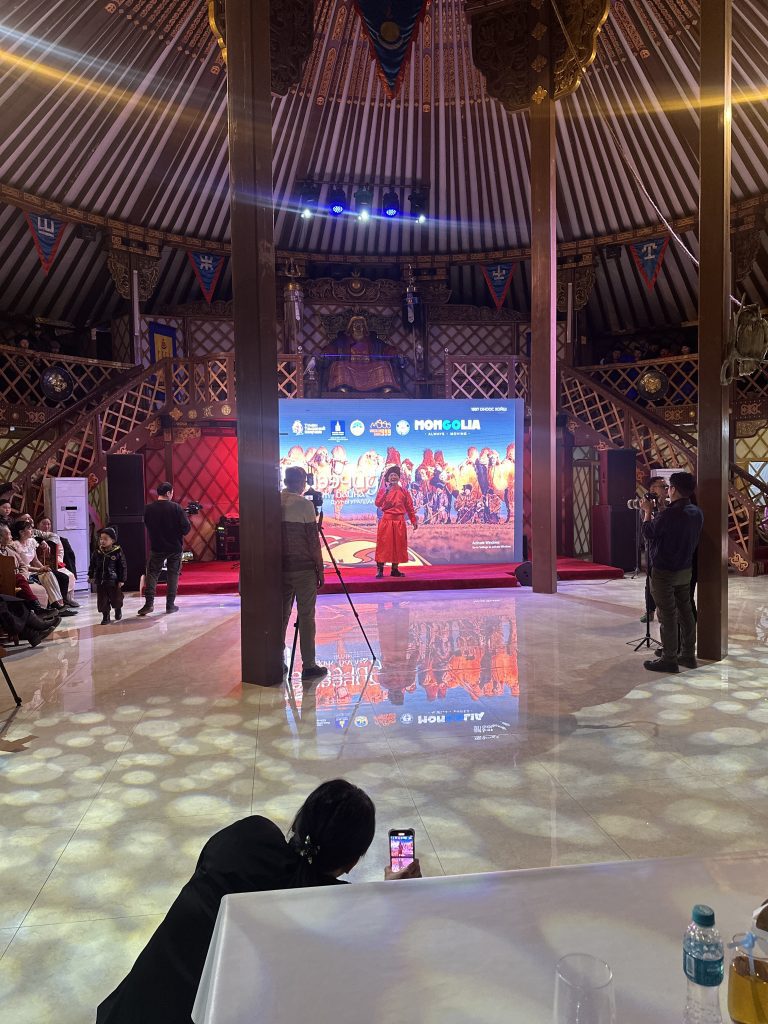
Our friend Khosoo – Camel herder singing at the event
Once the event ends, there’s a mix of excitement and hesitation in the air — some people are unsure about dancing in public, while others are eager, pulling friends and family into the circle to celebrate in true Mongolian style.
Image Gallery
-
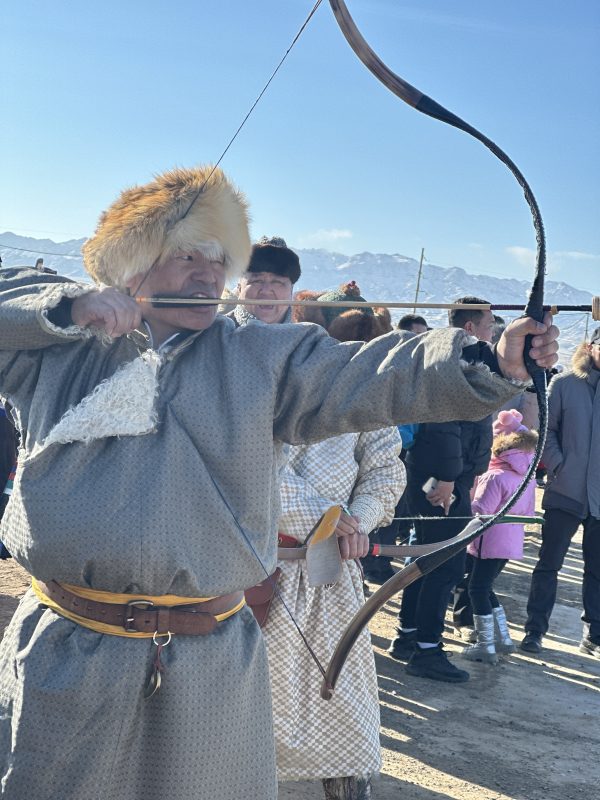
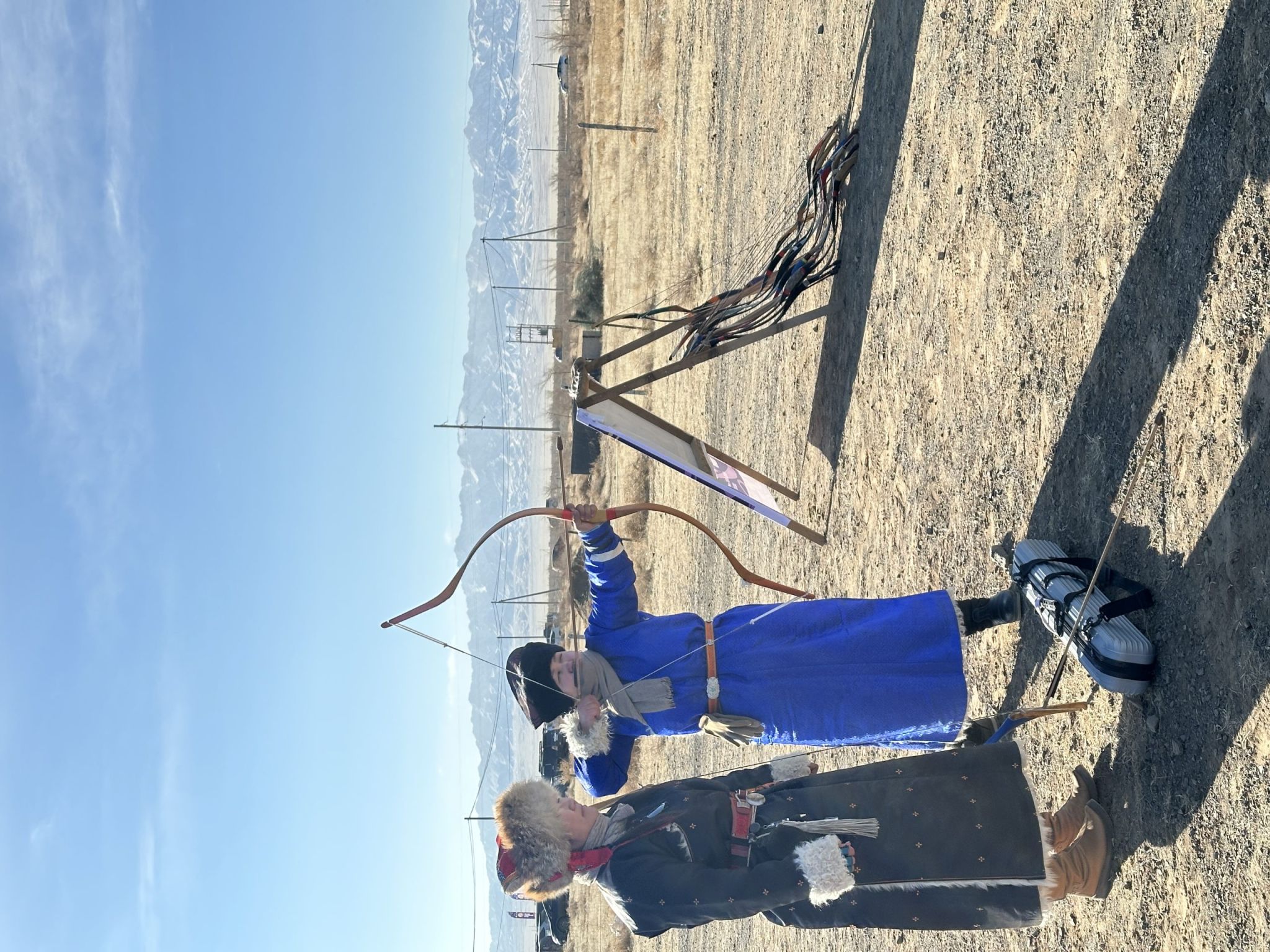
- Mens archery competition
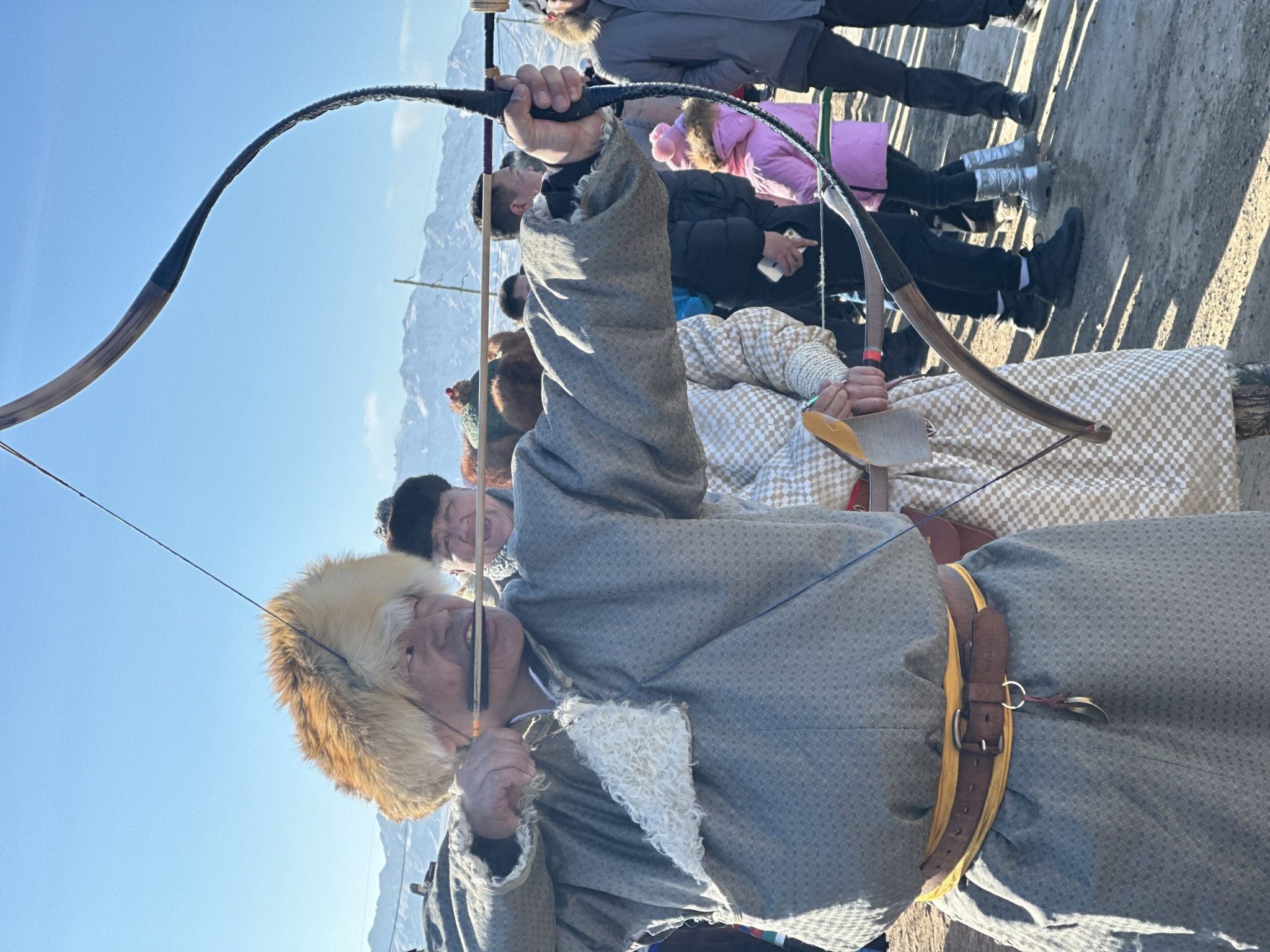
-
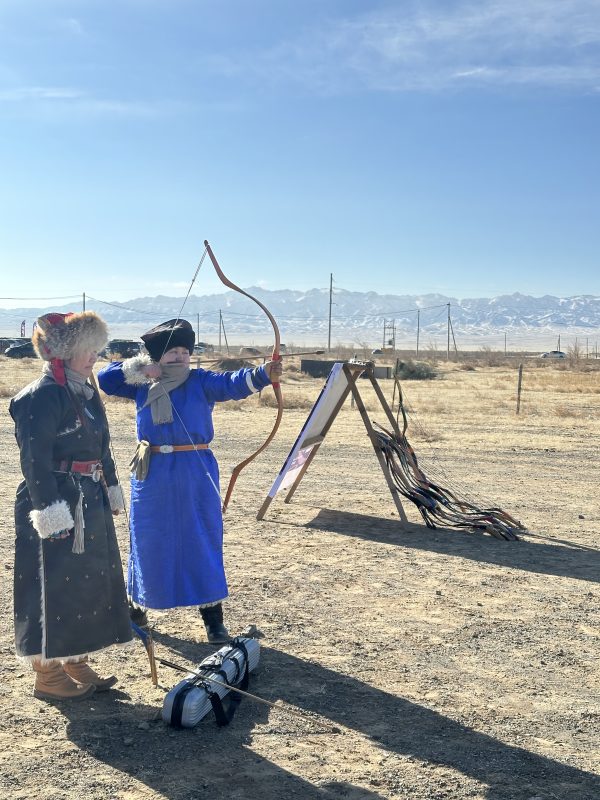
- Female archer preparing to shoot
-
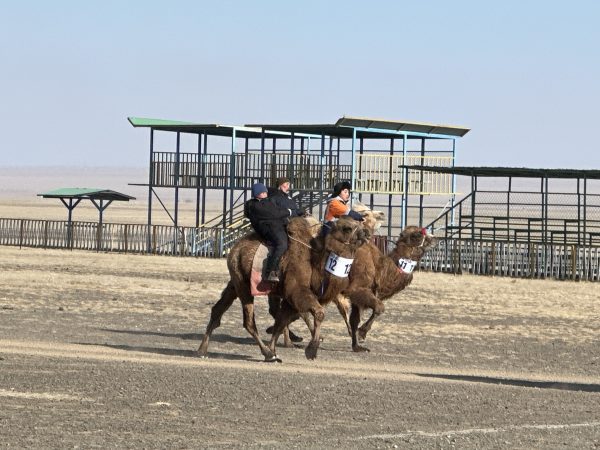
- Camel Race closing on the finish line

-
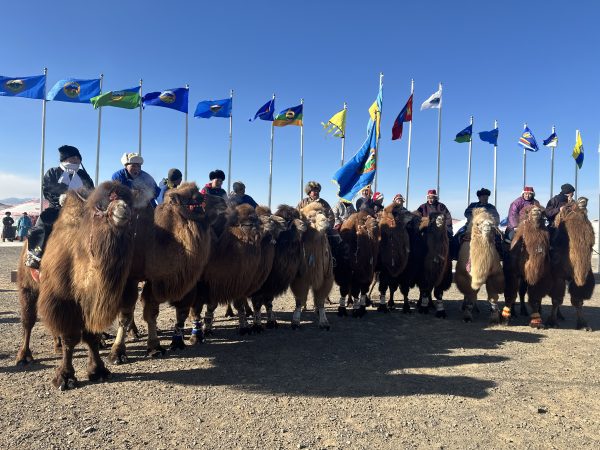
- Camel herders representing soums

-
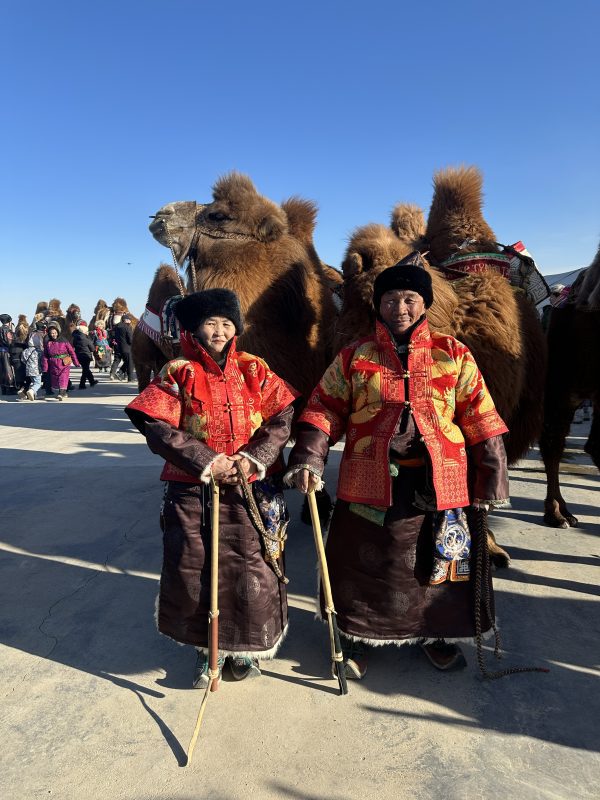
- Best couple winners of 2021

-
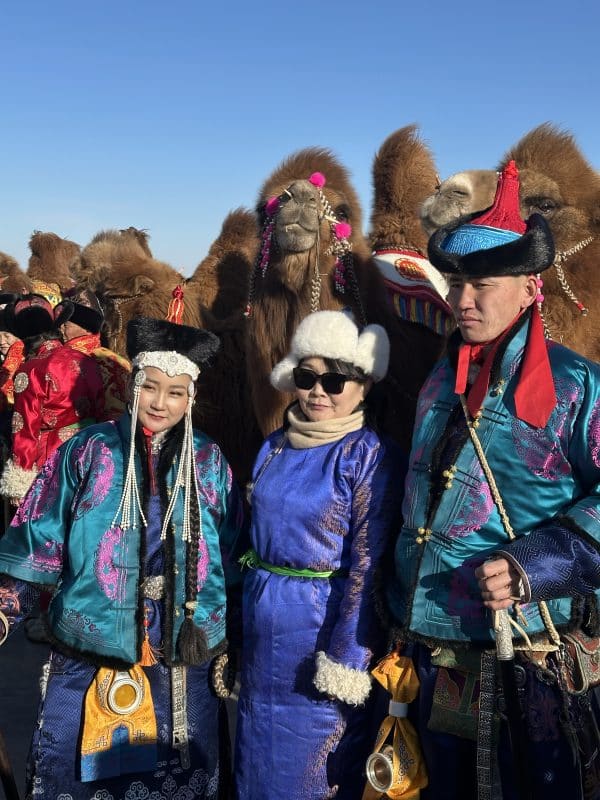
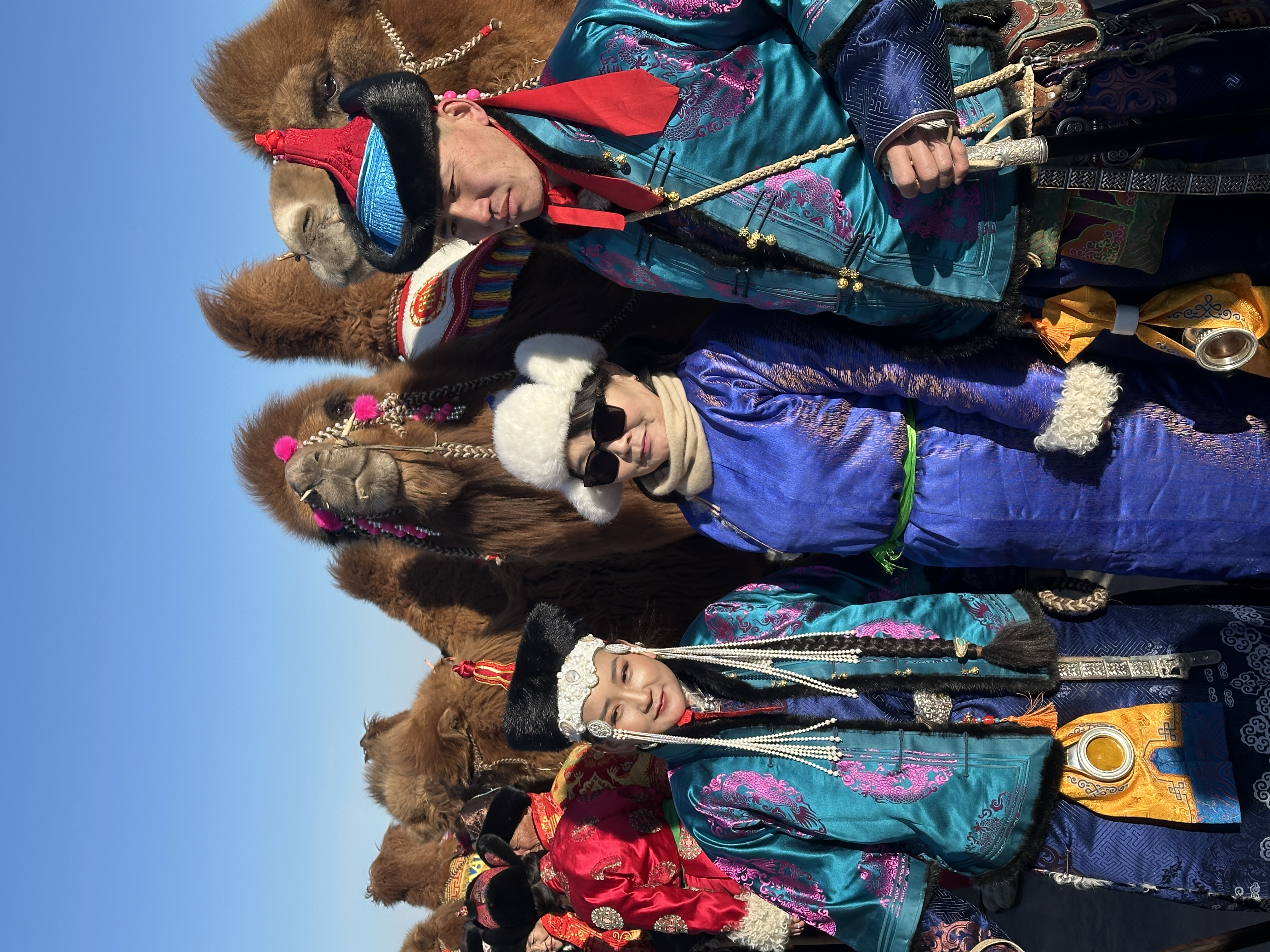
- People taking photo with best looking couples
-
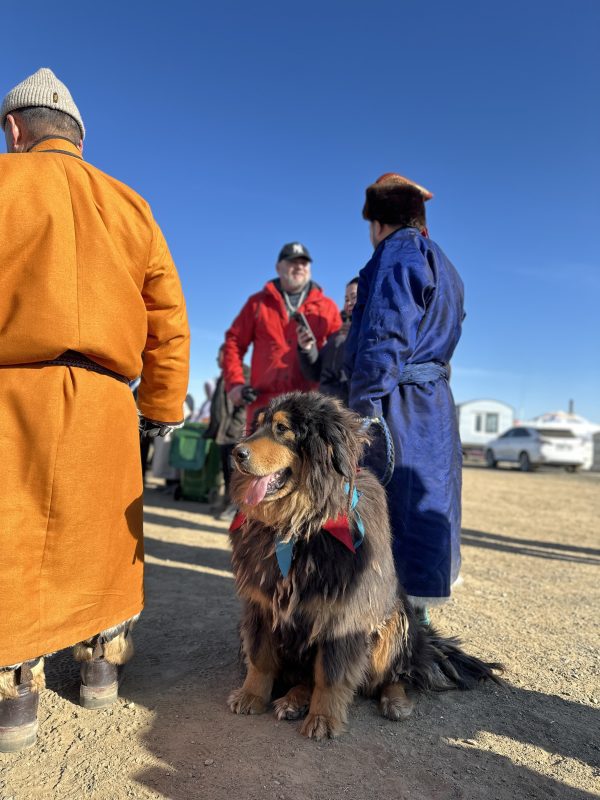
- Local Mongolian Mastif (Good boy) also enjoying the festival
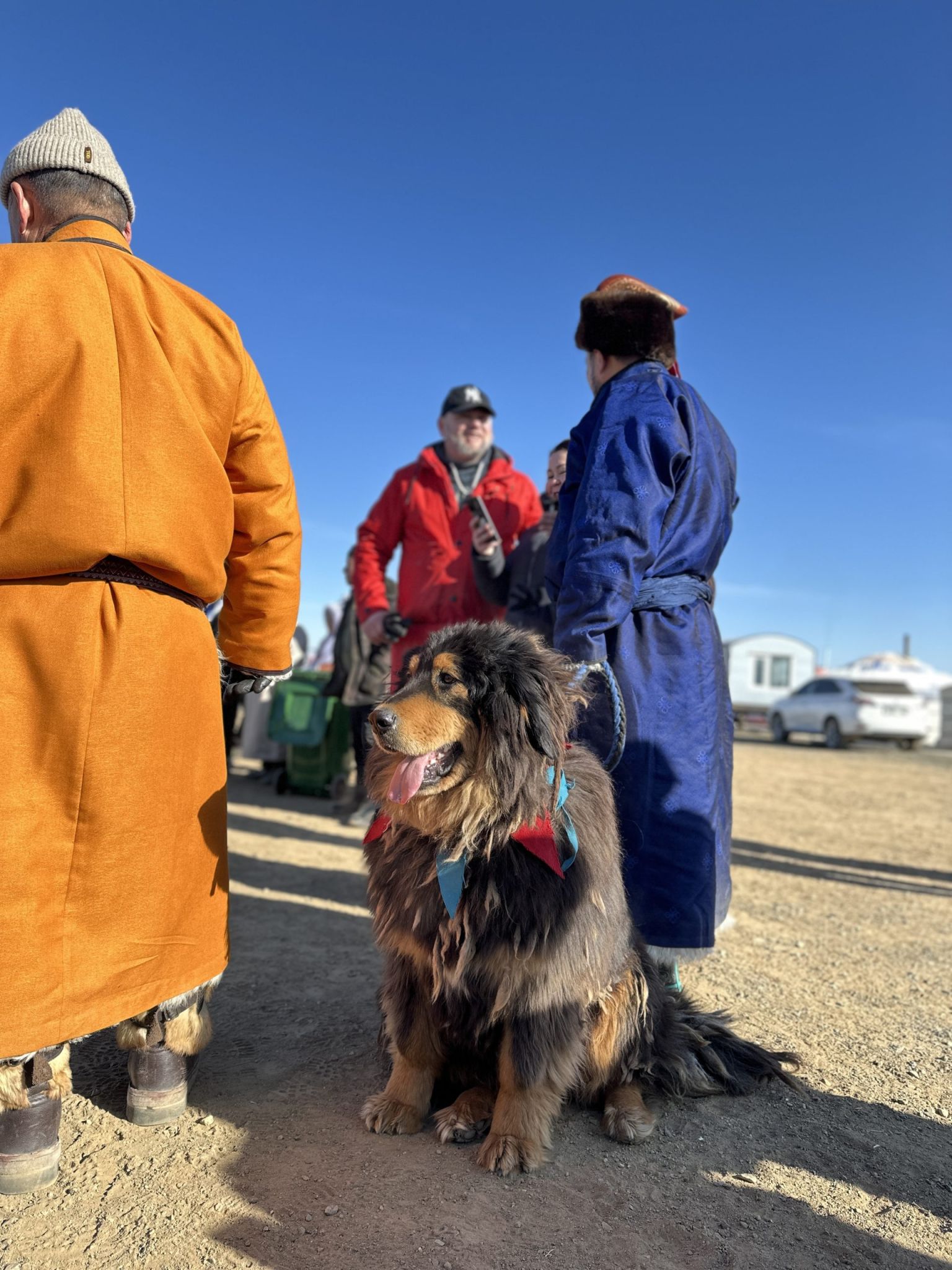
-
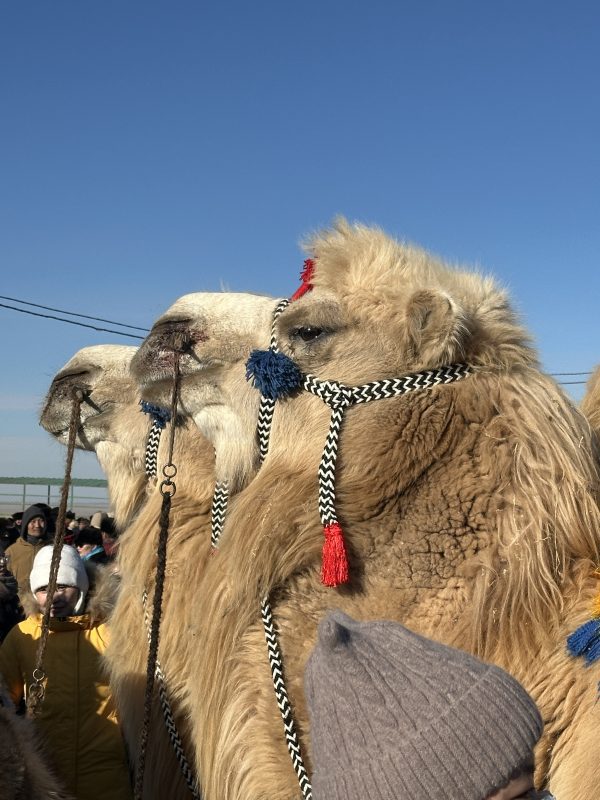
- Beautiful camels with ornaments

A feast for the senses
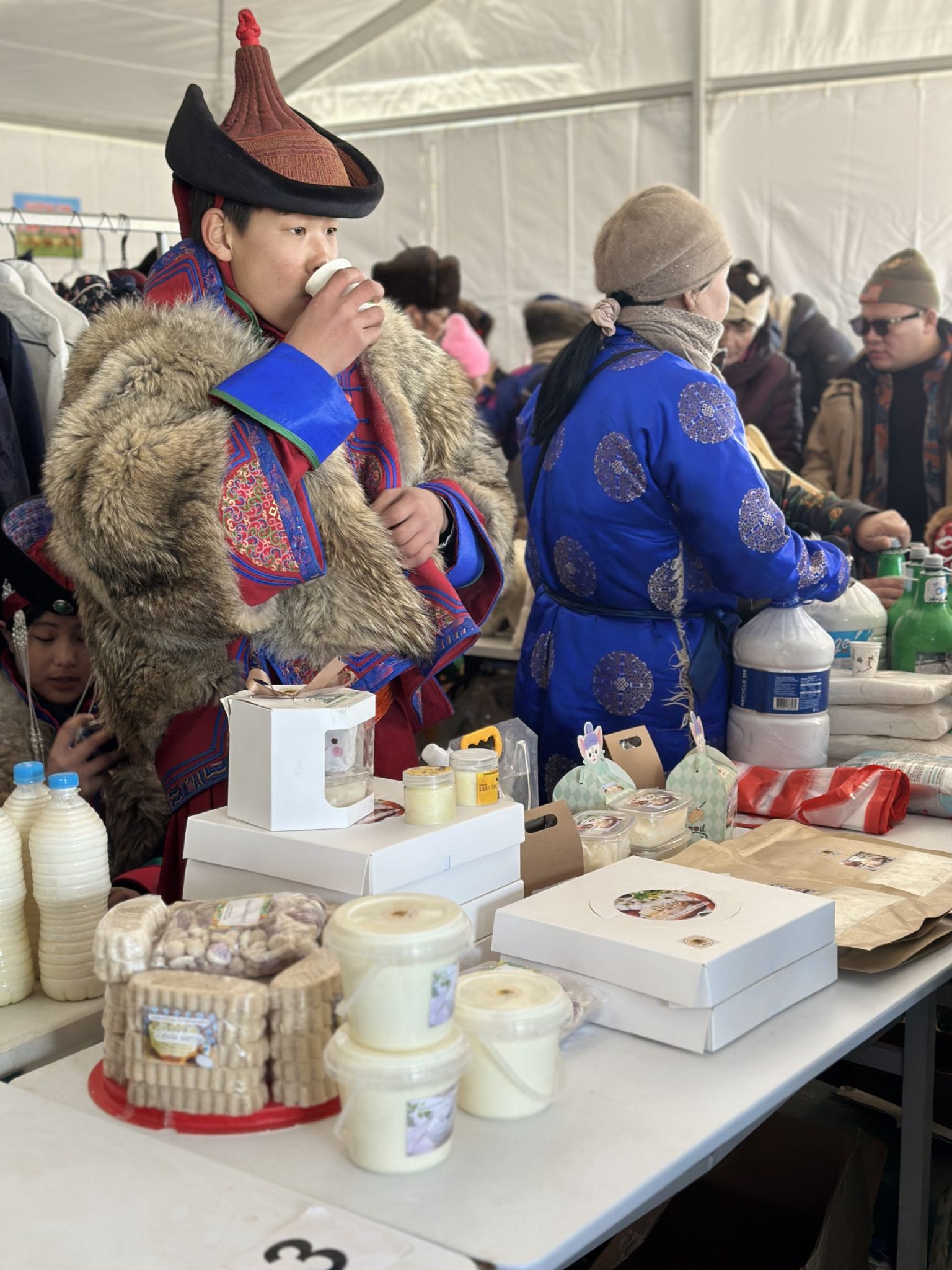
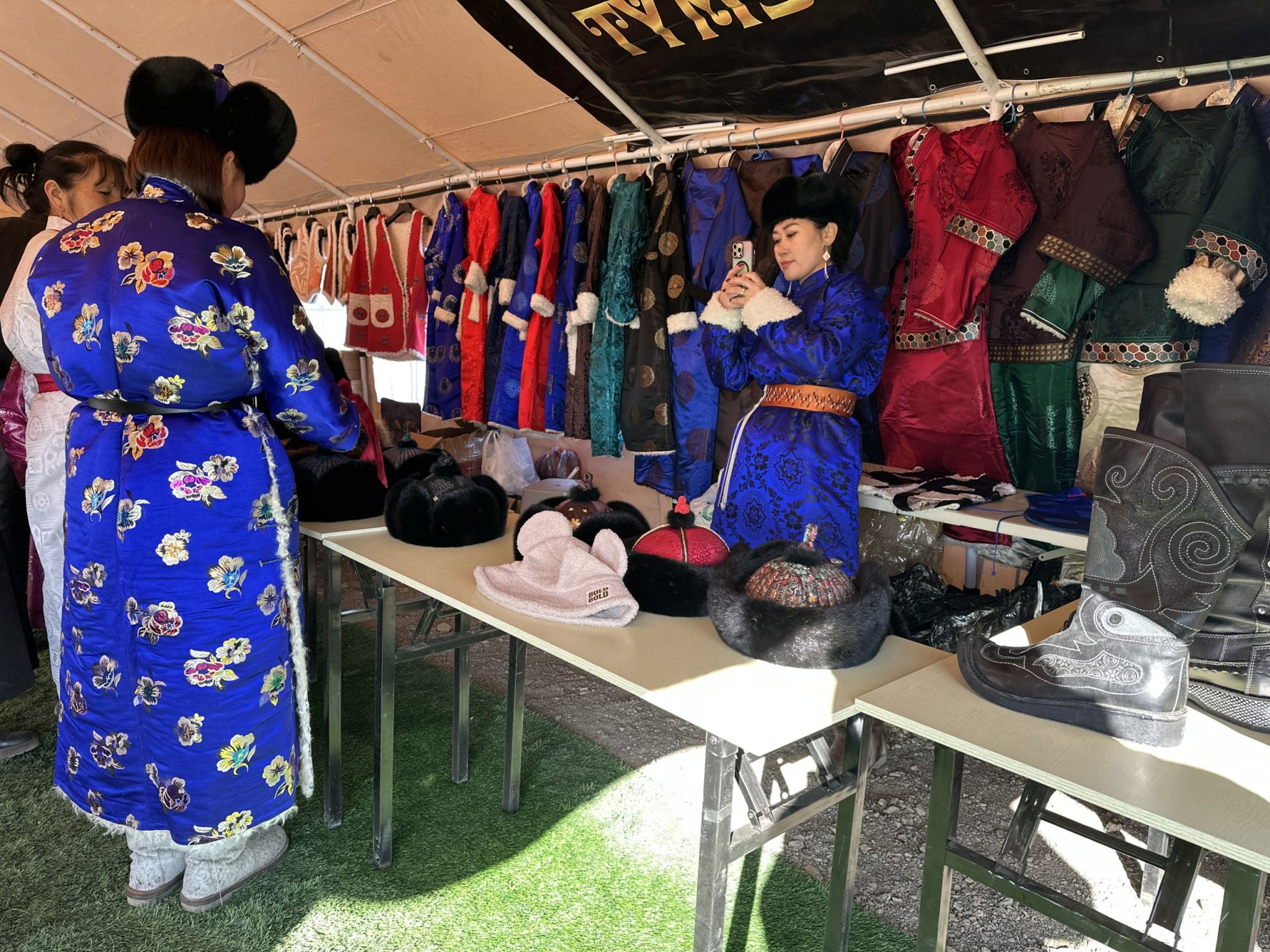
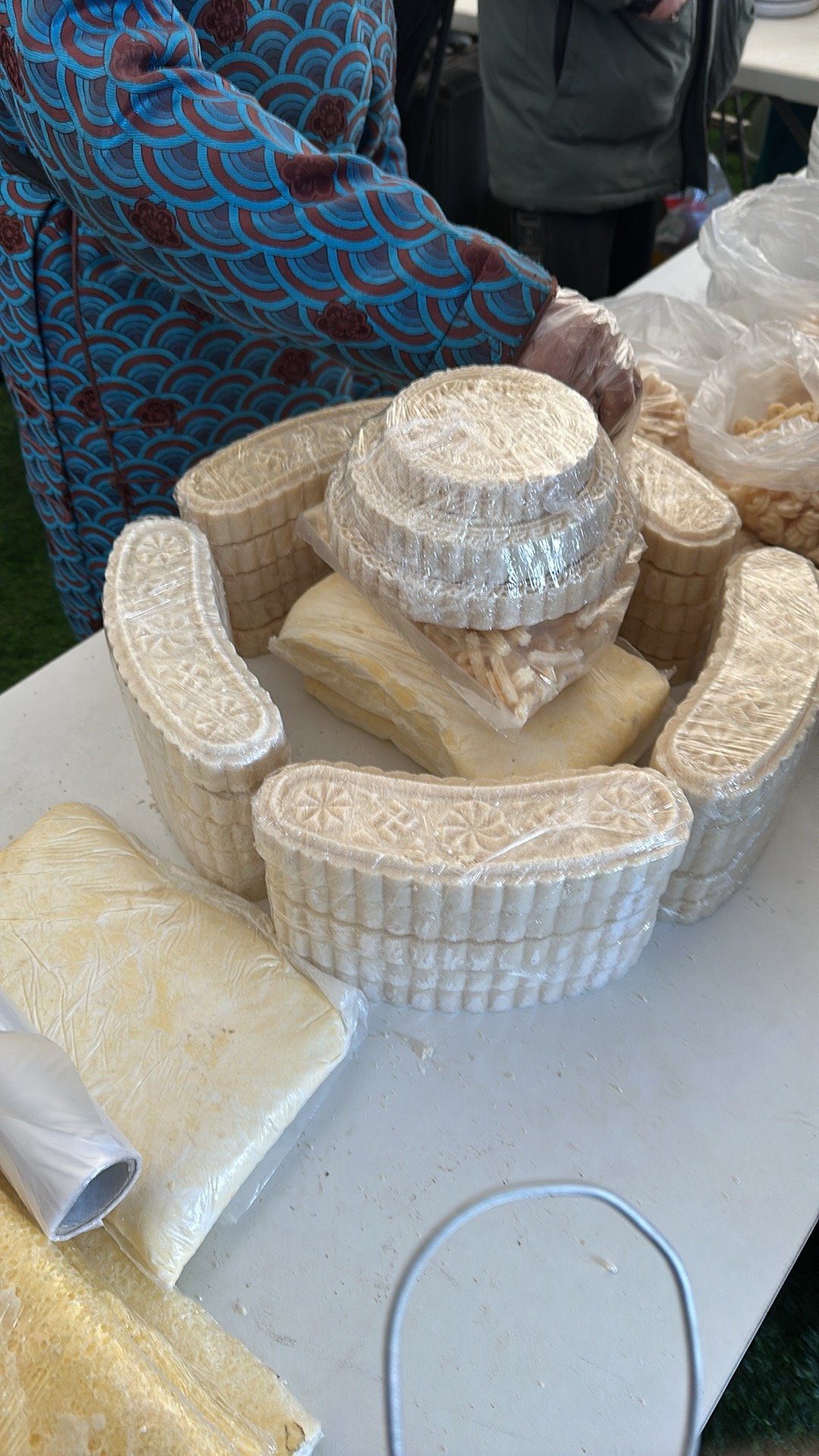
Beyond the excitement of the competitions, the market is alive with craftsmanship. Artisans showcase camel wool garments, each piece reflecting intricate patterns and techniques passed down through generations. The air is thick with the rich aromas of airag (fermented camel milk) and aaruul (dried curds), reinforcing the deep connection between the people and their camels.
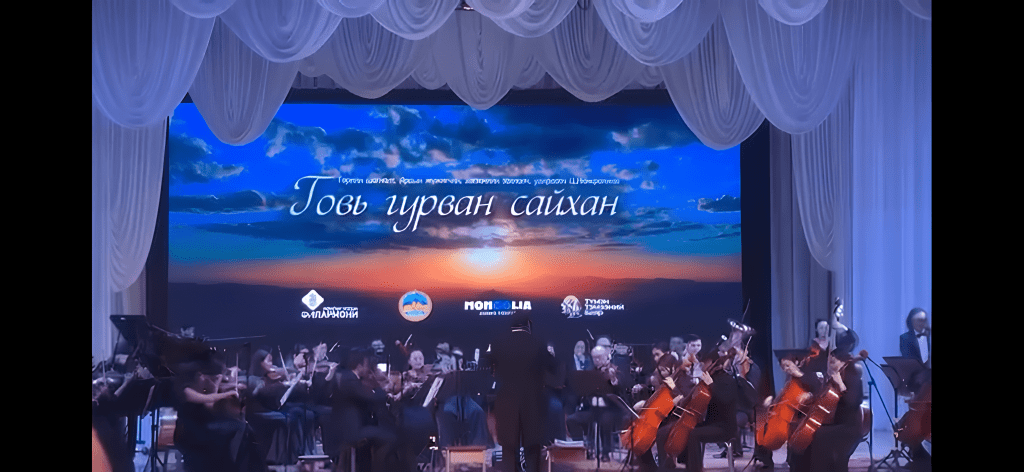
National Philharmonic Symphony Orchestra playing at the Music and Drama Teatre
In 2024, the legendary Mongolian rock band Hurd electrifies the crowd, fusing modern sounds with traditional influences. By 2025, the festival grows even more impressive, welcoming the National Philharmonic Symphony Orchestra. Their powerful rendition of Gobi Gurvan Saikhan fills the Khögjimti Jüjgiin Teatr (Musical Drama Theater), a venue chosen not only for its acoustics but also to shield musicians and attendees from the biting winter cold.
DJI_20250202_122142_666
Souvenirs, Gobi sand and salt products
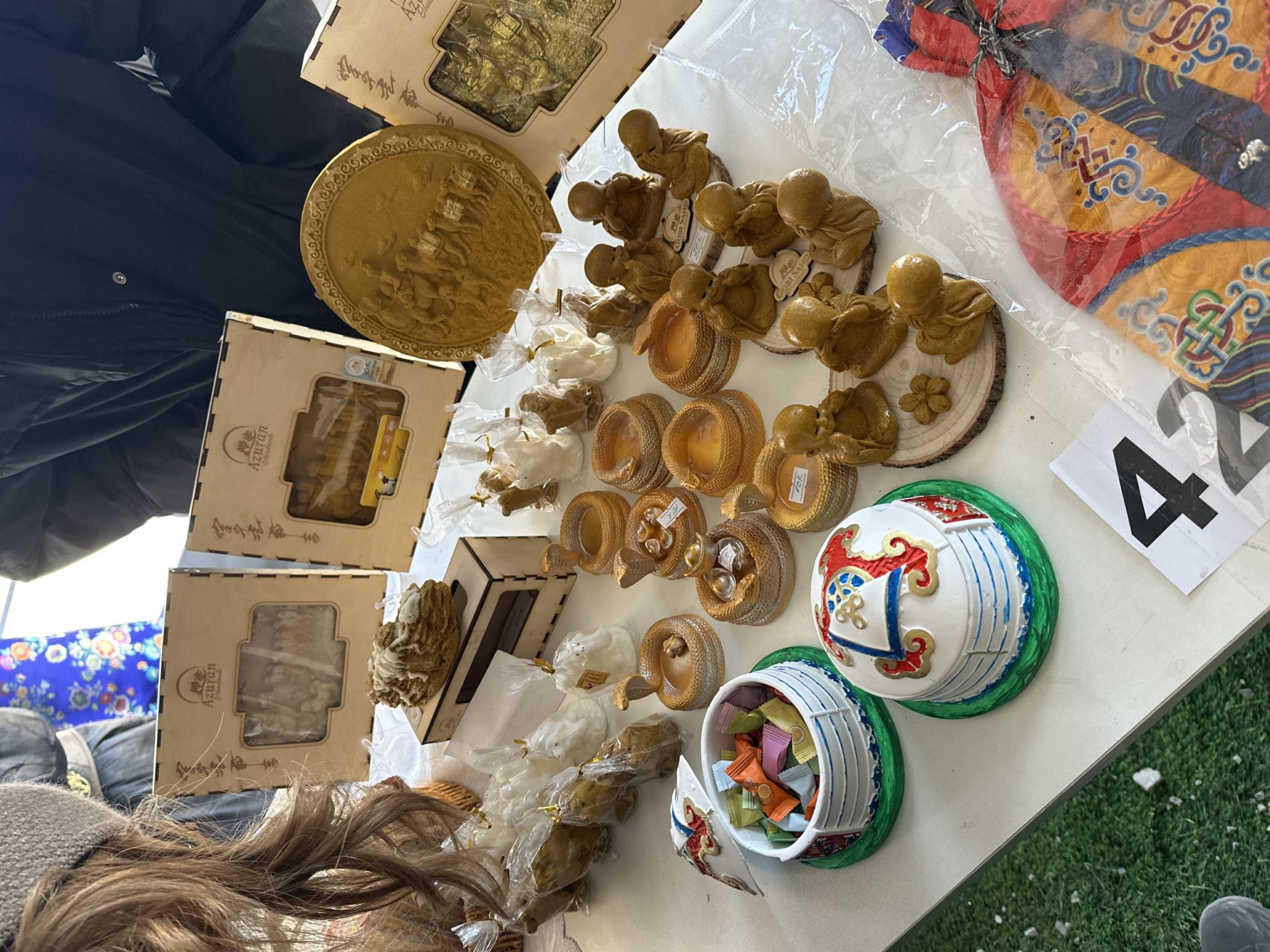
IMG_4508
Khoormog (fermented camel milk), milk dried curds, diary products
DJI_20250202_121843_474
Deel (traditional clothing)
IMG_4509
Milk curd
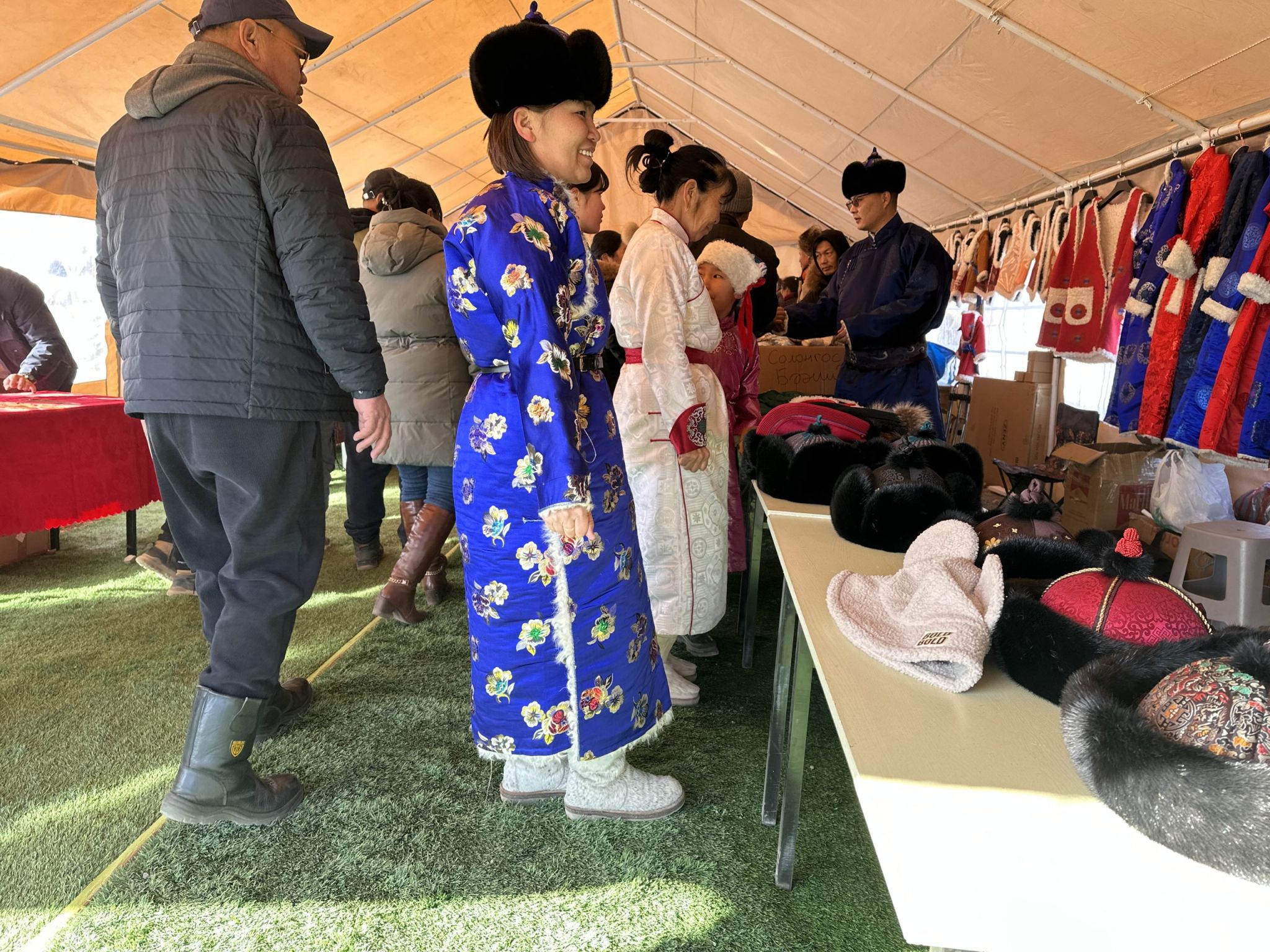
Event participant trying on deel (traditional Mongolian clothing)
Event participant trying on deel (traditional Mongolian clothing)
To witness the 1000 Camel Festival firsthand is to experience a world where tradition endures, and resilience is honored. Long after the last footprints in the snow fade, the spirit of the festival lingers, a lasting reflection of a culture as vast and enduring as the Gobi itself.






Keep In Touch